
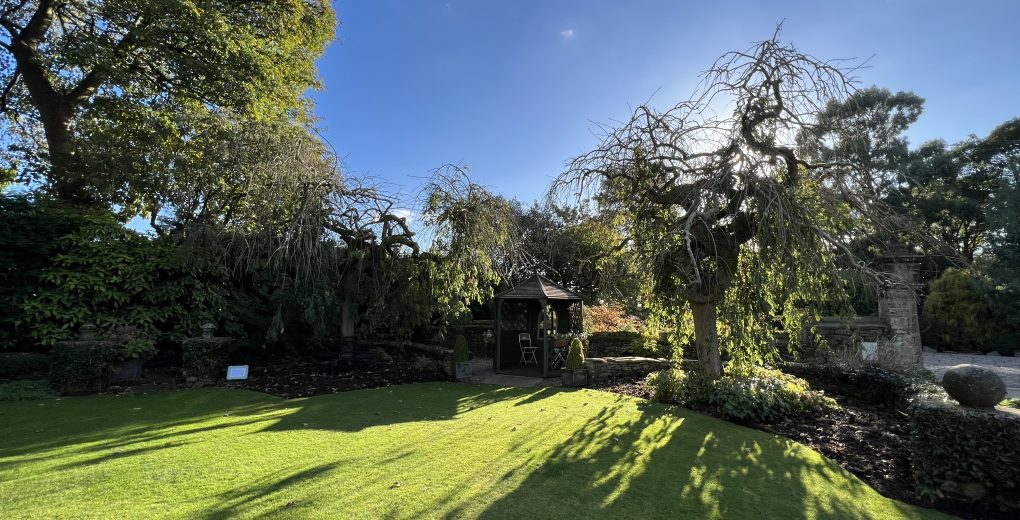
In the autumn of 1822, just as the ground had become ripe for tree planting, wealthy spinster Miss Elizabeth Wadsworth instructed her handyman, Samuel, to set out for Hipperholme and “fetch three little ash trees” for the gardens of her country manor, Holdsworth House.
The journey by horse and cart would have taken Samuel an hour or two each way, riding past the estate of Anne Lister’s Shibden Hall and climbing the hill towards Ann Walker’s Crownest pile and Lightcliffe.
It’s from Elizabeth Wadsworth’s diaries (spanning 1817-1829 and held on deposit at the West Yorkshire Archive Service at Halifax Central Library) that we can trace the origins of the Holdsworth House weeping ash trees, which mark their 200 year anniversary in 2022.
Elizabeth Wadsworth
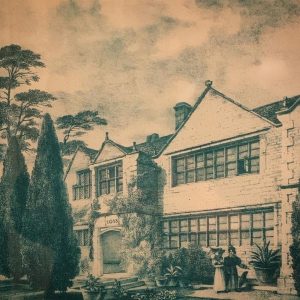
Elizabeth Wadsworth (depicted right in the above painting) was descended from a moderately wealthy family and inherited Holdsworth House from her late brothers. She never married nor had any children of her own, but she put her money to good use buying local farmland and cottages from which she drew tenant rent. Her income allowed her to live well at Holdsworth House, with a team of servants and men to maintain the house and grounds.
Elizabeth was a great philanthropist. The author of her diary transcripts (W.B. Trigg, 1943) provides a wonderful depiction of her character:
“[Wadsworth’s diary] gives us a very pleasant portrait of a lady with an ample sufficiency of this world’s goods, who found her greatest happiness in the service of others, who in her own time was the best friend of all her neighbours, and whose sympathy with the poor, and whose generous charity still live on in the village.”
It was the donations of Elizabeth Wadsworth that built the Popples schoolhouse (the foundation of Bradshaw Primary), the master’s house and other buildings for the education of 30 poor, local children. Her donations also built a number of almshouses in the Popples area of Halifax. To this day, the almshouses are rented to ladies aged 50 or over, who have been born in or resided in Bradshaw, Illingworth or Holmfield.
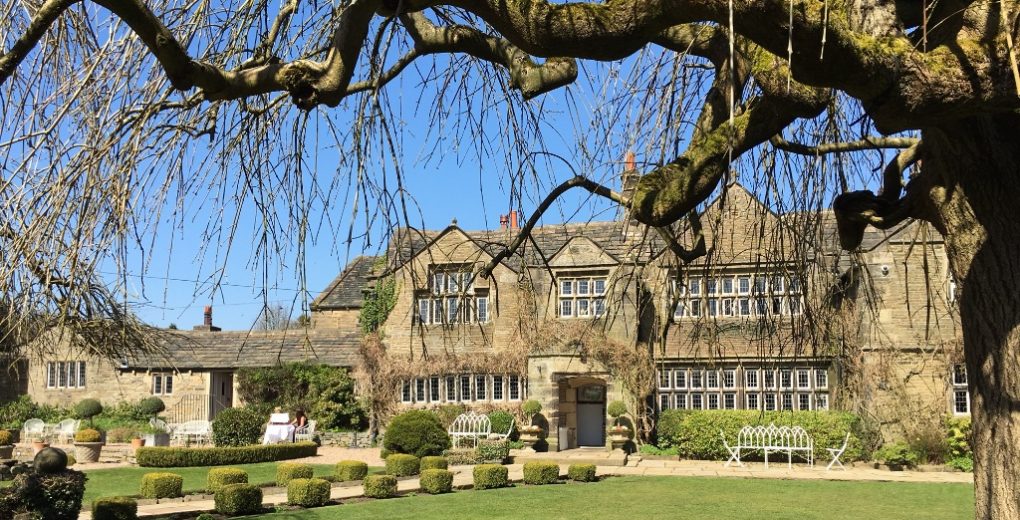
SETTING OF THE ASH TREES
According to Wadsworth’s diary, on November 13th 1822, with the ground freshly dug and prepared, Samuel “set the 3 ash trees”. In the decades that followed, the trees thrived, knitting their branches into a wonderfully gnarled and twisting canopy.
THE COLDEST WINTER ON RECORD
But in the winter of 1962–1963, one of the coldest on record since 1895, one of Elizabeth’s weeping ash trees was lost to the bitterness. It was at this same time that the Pearson family acquired Holdsworth House and began converting it from a house to a private member’s club, The Cavalier Country Club.
RESTORATION AND PROTECTION
In 2000, the Pearson family set about restoring Elizabeth Wadsworth’s original garden design. They imported a replacement weeping ash tree from Italy. Today, the stunning trees continue to provide shade and character to the wooden gazebo that sits beneath, which hosts outdoor weddings in the summer months.
At 200 years old, the weeping ash trees remain under close observation. Tragically, a disease called Ash Dieback is threatening the survival of the species in the UK. But, as with everything at the hotel, the historic trees are given the best care and attention to protect them, including specialist treatments that we hope will prolong their longevity.
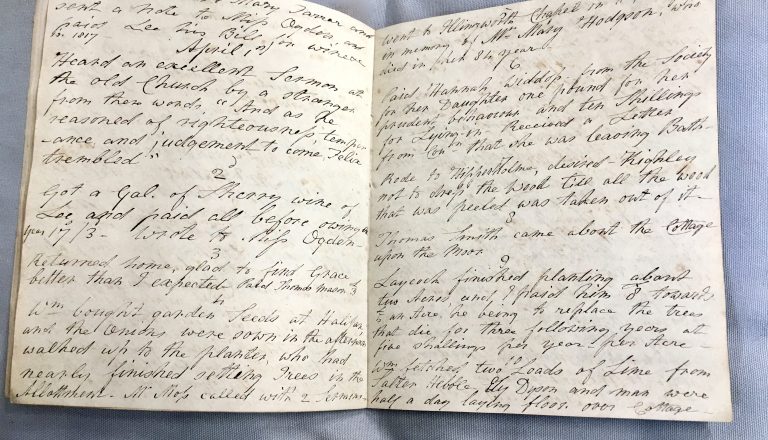
Example of Elizabeth Wadsworth’s diary, courtesy of West Yorkshire Archive Service (RMP:1060 and RMP: 776-787)

