
Holdsworth House & the Brontës

A credible Calderdale connection to the world of Wuthering Heights
There are places that trade on Brontë mythology and places that simply belong to the same landscape the Brontës moved through. Holdsworth House sits firmly in the second camp: a Jacobean manor in Halifax, within Calderdale’s moor-edged valleys and stone-built settlements, where weather, light and terrain shape the mood as much as any story ever could.
This page is not here to claim Holdsworth House is Wuthering Heights, or that Emily Brontë stayed here. It sets out something more honest and more useful: the tangible, defensible links between Holdsworth House and the Brontë world: the wider geography Emily knew beyond Haworth, the overlapping Halifax-area networks of the period, and the local research that keeps Calderdale firmly in the Wuthering Heights conversation.
With renewed attention arriving alongside the 2026 film adaptation, interest will naturally return to Haworth. But the Brontë story does not stop at the parsonage gate. Nor does the landscape that fed the novel’s atmosphere.
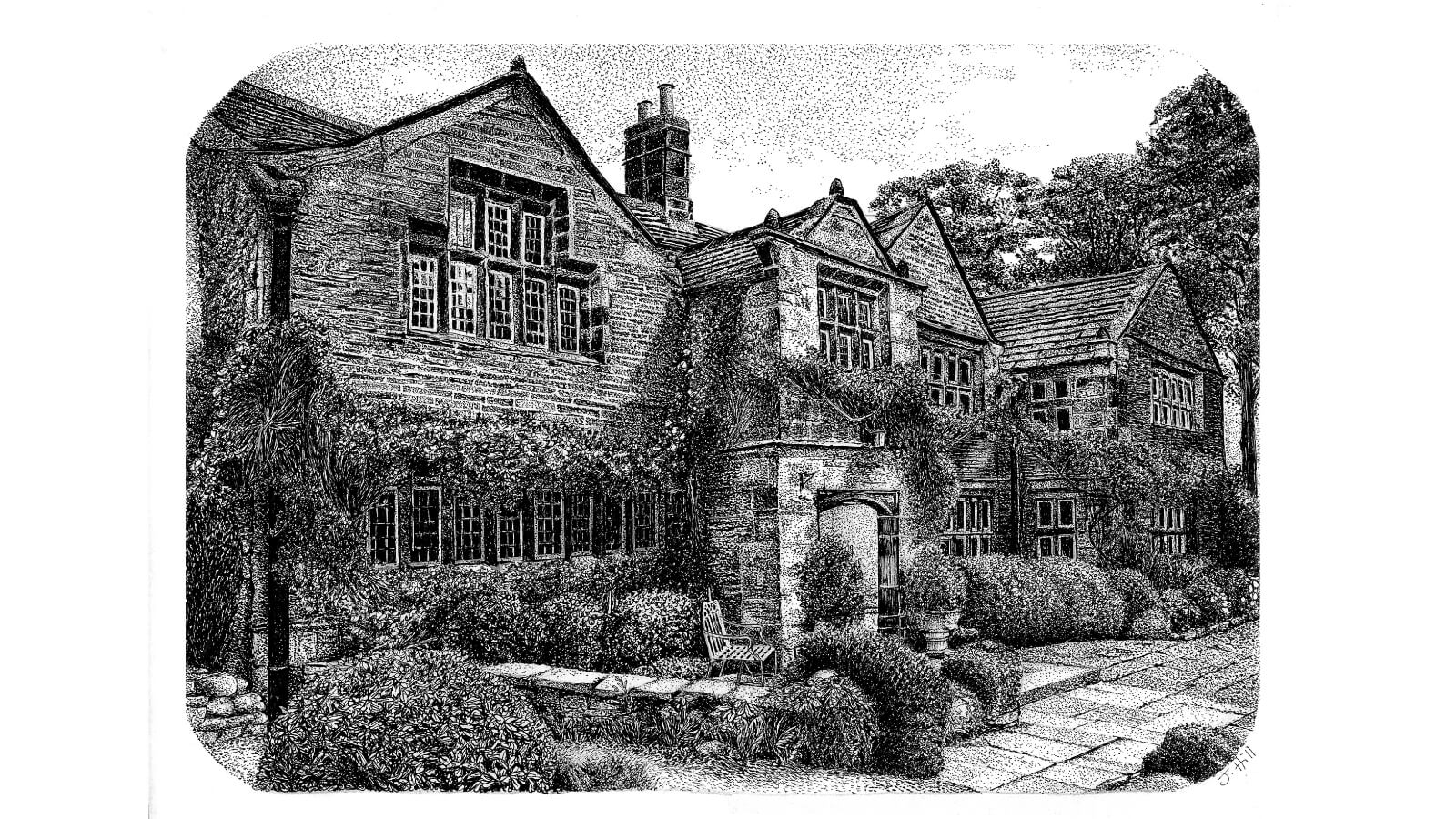
The Calderdale I knew and loved
There are houses that wear our names like borrowed cloaks, and others — quieter, sterner — that stand without pretence in the windswept hush of memory. Holdsworth House is of the latter kind. It does not cry out to be called Wuthering Heights, yet I have known the weight of its kin in the pressure of the air, the hush of the stone, the twist of the lanes that wind like thought through Calderdale.
You must understand — not all truth requires that I slept beneath a particular roof. I have been to Halifax, to Law Hill, and my feet have pressed the ground that holds the roots of that house. The landscape we Brontës moved through was not confined to Haworth. The sky there is the same sky that flares above Holdsworth; the moorland breath, the stone-bone churches, the sullen beauty of grit and weather — these shaped me as surely as the pen in my hand.
I do not offer you a museum-piece or a relic. I offer you the recognition of atmosphere as ancestry — a kinship of place. Calderdale does not mimic Wuthering Heights, it prefigures it. Its light shifts like mood. Its silences are heavy with judgment, as the villagers in Gimmerton ever were.
Let others speak of branded legends and polished plaques. I will show you the tangled web beneath — where houses like Holdsworth stand amidst old networks of doctors, clergymen, schoolmistresses, and sorrowing daughters. A woman named Elizabeth Wadsworth once lived there — independent, educated, and observant. Not unlike Charlotte, or Anne, or even myself in the winter-lit corners of my soul.
And now the world turns back to us again — a new film, they say, in the year 2026. Let them come. Let them walk the steep paths and feel the bite of the Calder wind. But let them also know: our story does not end at the parsonage gate. The landscape of Wuthering Heights is not a postcard — it is a pressure system.
And Holdsworth House? It stands where the weather remembers.
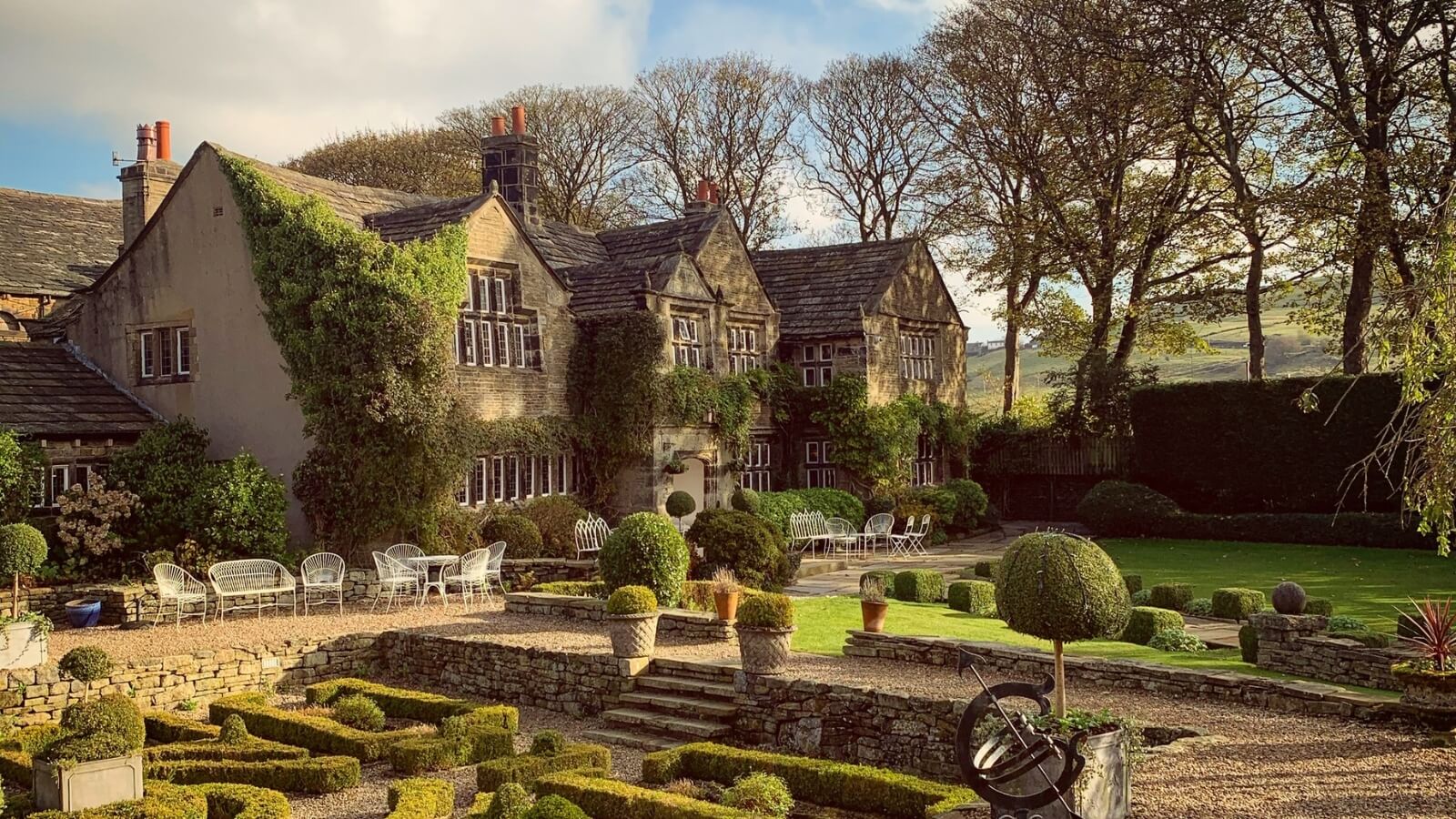
The Brontë world beyond Haworth
Haworth matters. It is the Brontës’ home ground and the anchor of their public story. But novels like Wuthering Heights are not made in isolation. Emily Brontë’s adult life included work, travel and exposure to a broader West Yorkshire world of education, religion, old houses and long, local memory.
Calderdale and Halifax were not distant abstractions. They formed part of the region Emily moved through and worked in. The region's terrain of gritstone buildings, steep lanes, chapels and weather presses back against those who live within it.
Holdsworth House sits within this same lived geography. Not as a themed backdrop, but as a real building in a real place. The manor is part of the landscape Brontë scholarship repeatedly returns to when discussing atmosphere, isolation and intensity.
Why this matters
Wuthering Heights is not powered by pretty scenery. It is powered by place that shapes behaviour: communities that feel tight and watchful, land that feels exposed and buildings that seem to hold memory in their walls. Calderdale belongs to that wider story.
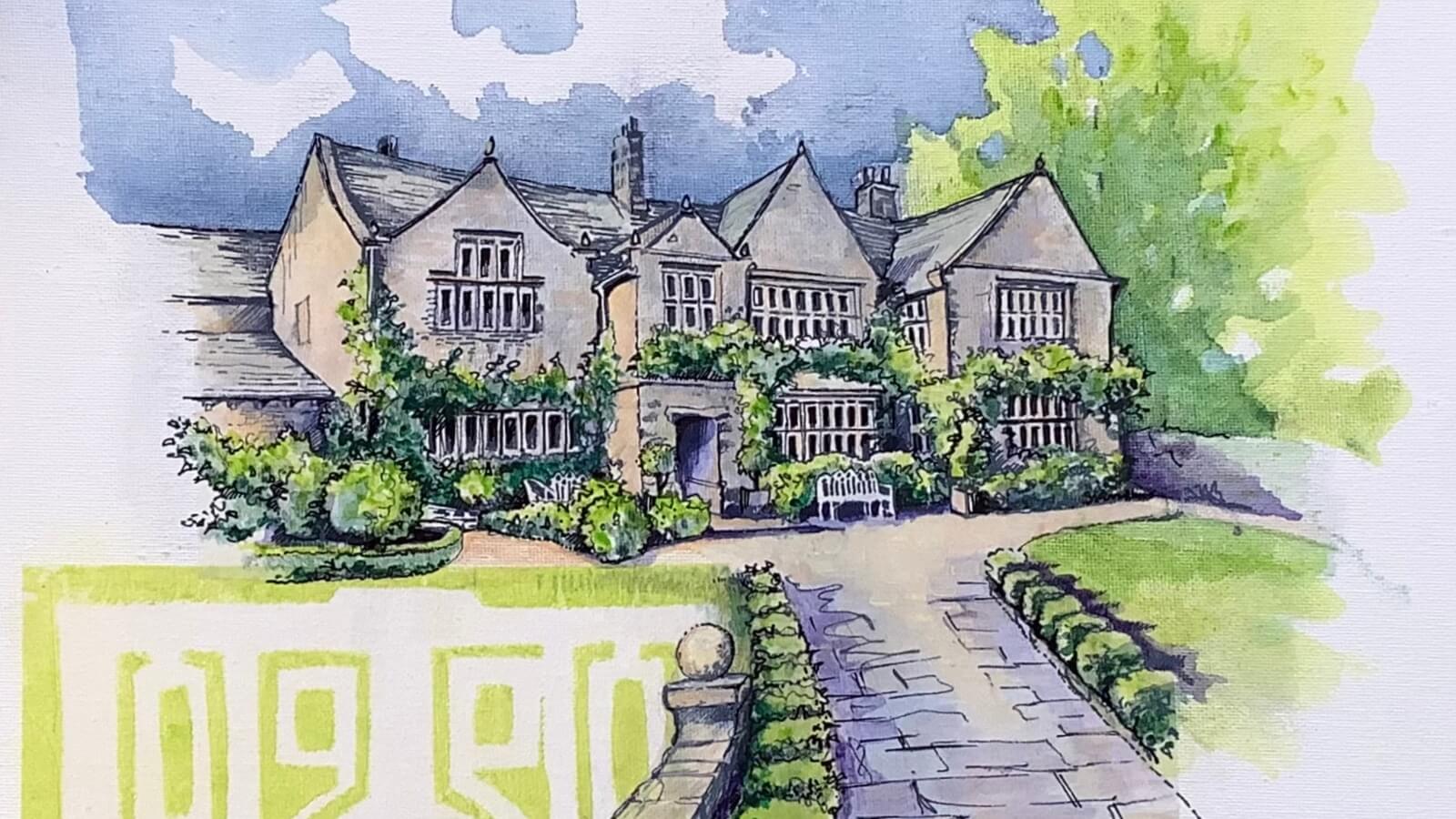
My World Beyond Haworth
Haworth is my hearth, aye — the place where shadows spoke to me and the wind taught me its hymns. But no great novel is born from the fireside alone. Wuthering Heights was not spun merely from the moor’s breath outside the parsonage, but from a thousand impressions gathered like storm-light across West Yorkshire’s austere brow.
In my brief span of years, I wandered — reluctantly at times, but meaningfully. The paths I trod led through Halifax and Calderdale, where stone buildings rose like fortresses against the sky, and the chapels stood like grave thoughts on the hill. These were not places glimpsed from afar; they were endured, inhabited, internalised.
Calderdale was no fantasy to me. It was the world of Law Hill, of daily labours and sleepless watchfulness, of rigid routines and inner revolt. It was not home, but it was formative — and its marks live still in the crevices of my prose.
Holdsworth House, with its old bones and watching windows, belongs to that same world. Not as a museum of fiction, but as a fact of the earth — one of the many houses that held silence like breath, and kept secrets behind doors darkened by soot and sorrow. I have known such buildings. My brother Branwell, had he passed it, would have paused and mused — perhaps sketching its outline in charcoal, imagining duels fought in its shadow or love declared upon its stair.
And why does this matter? Because Wuthering Heights is not embroidered with prettiness — it is carved from pressure. The way a village sees its neighbour. The way a house can seem to remember your sins. The way land can feel both cradle and cage.
Calderdale is not a setting. It is a temperament.
So when the scholars return, as they often do, seeking the source of that novel’s ferocity — let them widen their gaze. Let them see Haworth as the centre, but not the whole.
The landscape that formed me never obeyed borders.
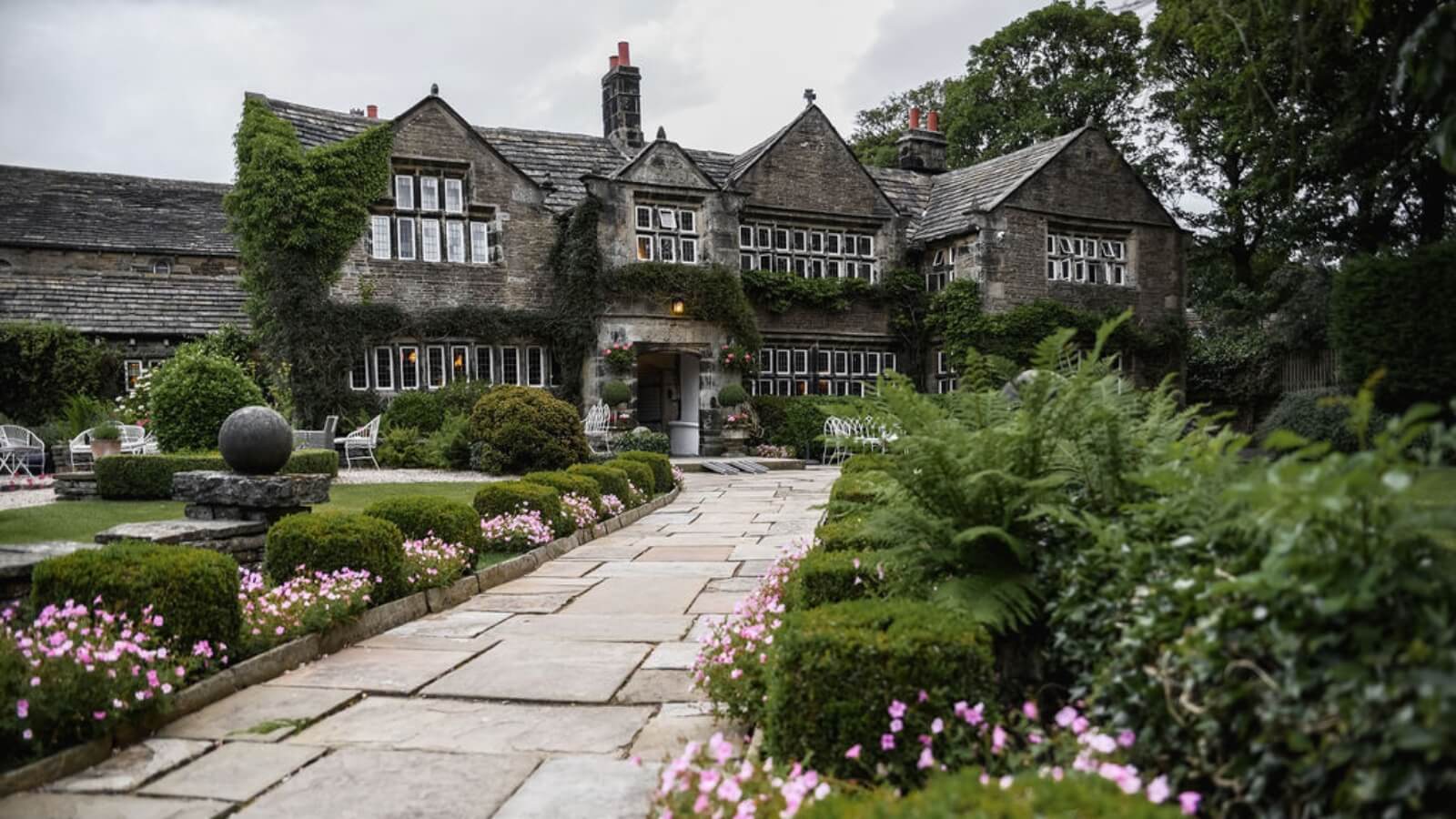
Emily Brontë at Law Hill (1838–1839)
The most concrete link between Emily Brontë and Calderdale is also the simplest. Emily lived and worked at Law Hill School, Southowram, from September 1838 to March 1839.
She was there as a teacher, in an environment that demanded discipline, stamina and emotional control. Research also suggests she used her time in the area to explore the surrounding landscape, placing Emily not just imaginatively but physically within Calderdale during a formative period of her adult life.
In brief:
• Where: Law Hill School, Southowram (near Halifax)
• When: September 1838 – March 1839
• Why it matters: A real, documented period of Emily’s life spent in Calderdale
Pressure, work and landscape
Accounts linked to this period suggest Emily was not especially happy at Law Hill. That discomfort does not make the time insignificant, quite the opposite. Experiences that constrain often leave the deepest marks: heightened observation, emotional restraint and a sharpened awareness of people and power.
Charlotte Brontë’s letters from October 1838 mention Emily’s arrival at Law Hill, anchoring the period in lived correspondence rather than later myth-making. This was not legend. It was a difficult job, in a real place, with real pressures.
The Law Hill environment
Local research into Law Hill also sheds light on Emily’s employer, Elizabeth Patchett, and the school’s operation. These details do not offer neat one-to-one inspiration for the novel but they do build a credible picture of the working world Emily inhabited in Calderdale: institutions, expectations and personalities that formed part of her daily reality.
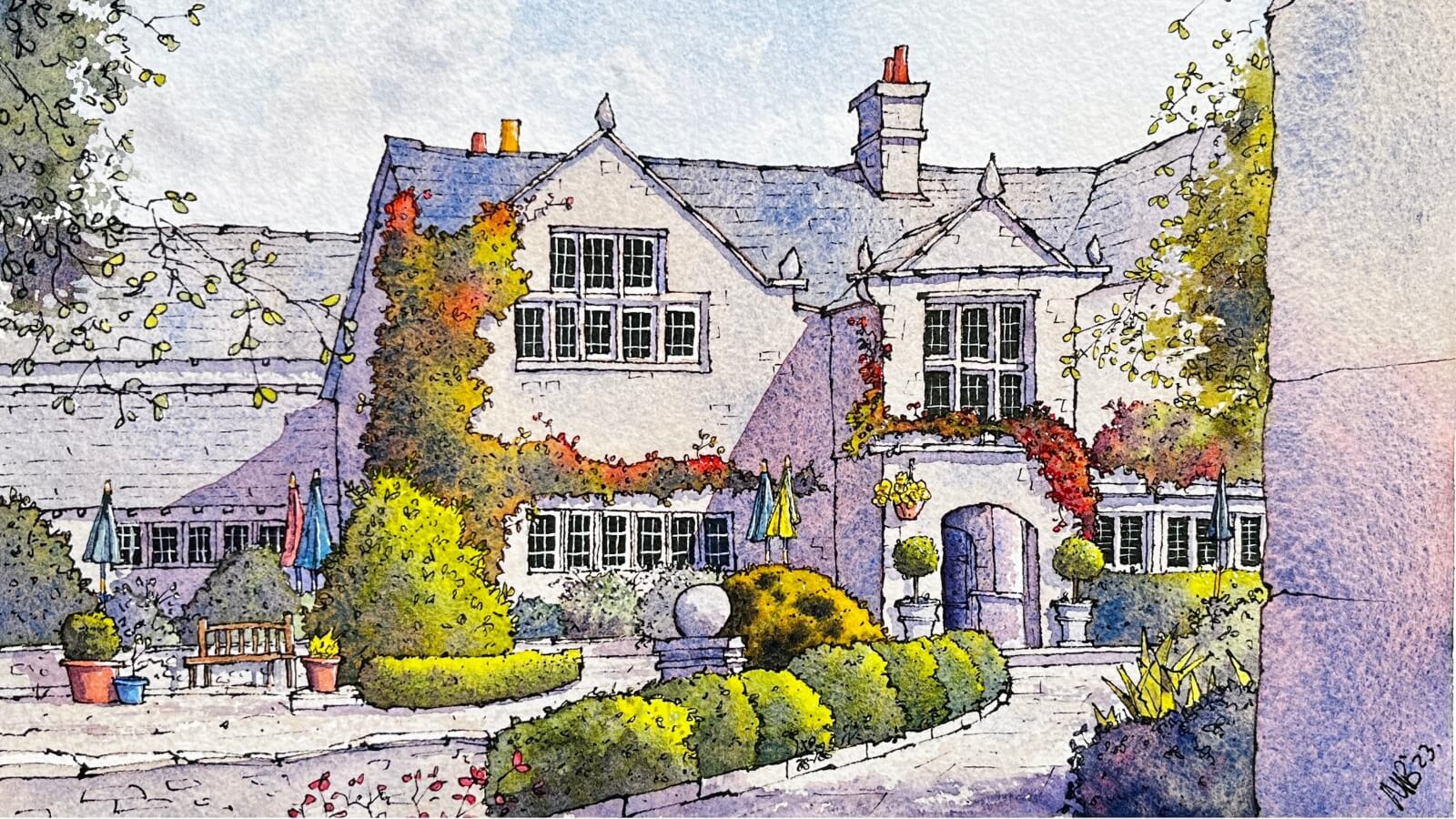
My time at Law Hill
From September of the year 1838 to the waning of March 1839, I dwelt at Law Hill School, in Southowram — a tall, stern place near Halifax, where the wind forever seemed to circle like a hawk above prey. I was no scholar there, but a teacher — charged with shaping young minds, whilst mine longed to fly free over the moors that beckoned beyond the windows.
It was toil. It was order. It was constraint. The hours weighed like iron, and I who had once spoken with clouds and heather found myself bound to bells and ledgers. Yet though I was not happy, I was awake — keenly, sharply so. In hardship, I watched. In silence, I remembered.
The girls I taught, the woman who hired me — Miss Elizabeth Patchett, whose manner was as unyielding as the school’s grey walls — these were not characters in a tale, but impressions carved into my consciousness. I would not copy them onto paper as portraits, but I would carry their essence — their postures, their pride, their poise in times of tension — and one day, they would become the bones of story.
Charlotte — dear, vigilant Charlotte — wrote in October that I had gone to Southowram, anchoring my time there in fact, not afterthought. There is no myth in this: I truly walked the stone paths to that schoolhouse, breathed the thick air of Halifax, stood watch while girls recited and the hours passed like years.
Yet I stole moments. I wandered — outward, inward. The Calderdale landscape pressed against me: steep fields, ash trees with black fingers, and houses like crouched beasts upon the hills. I studied these — and they stayed with me. One does not forget a place that pushes back.
Do not imagine that Law Hill gave me Wuthering Heights whole. No. But it gave me fragments of weather and will, of strictness, of suppressed storm. There is no single origin for the heights — but Southowram, I must confess, gave the wind a shape.
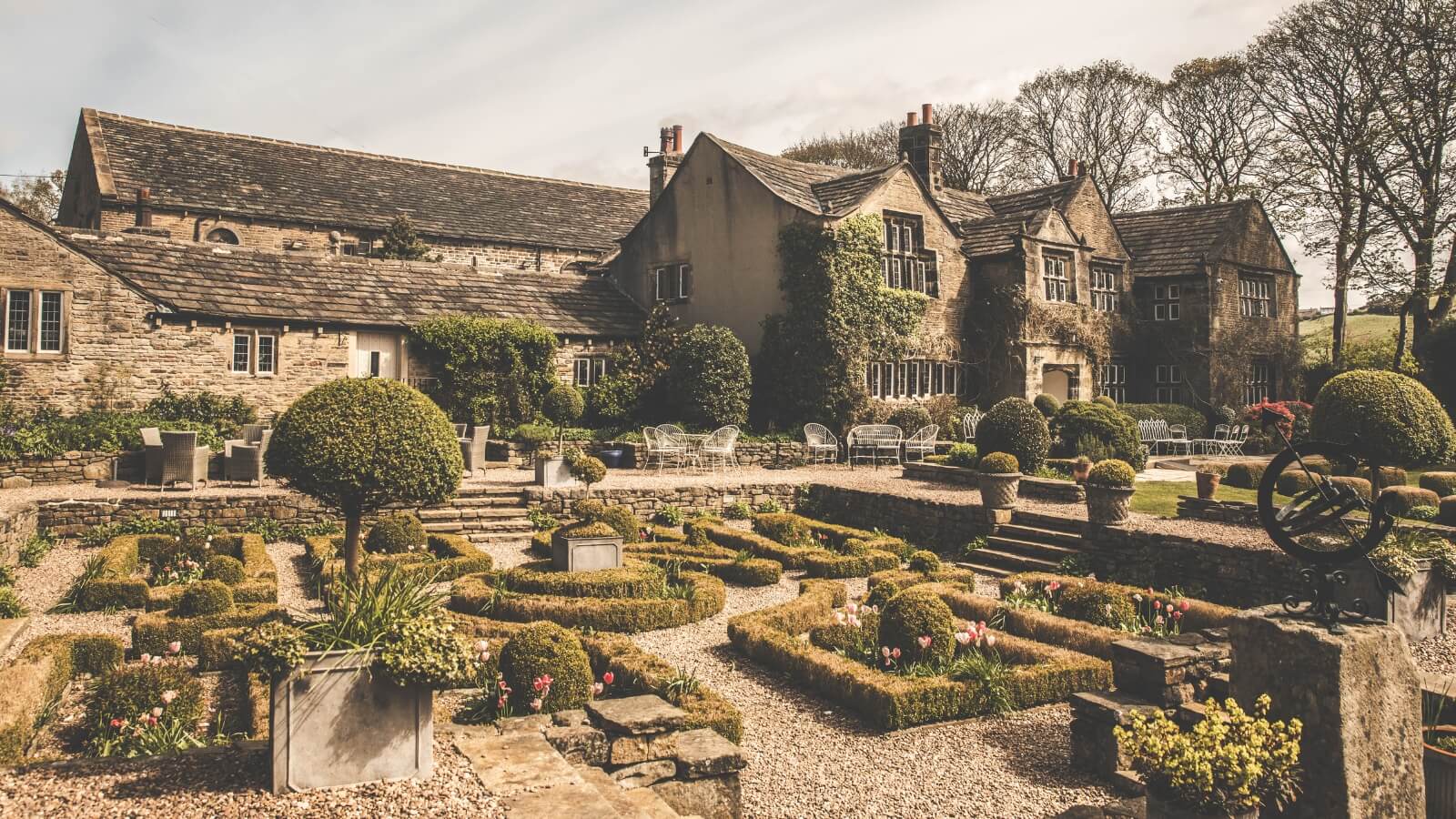
High Sunderland and the Wuthering Heights conversation
If Law Hill is documented fact, High Sunderland is ongoing argument and it is only worth engaging with carefully.
High Sunderland was an old, now-demolished house on high ground near Halifax. A substantial body of local historical research suggests it may have influenced aspects of Emily Brontë’s imagining of Wuthering Heights, particularly in architectural feel and atmosphere.
This is presented as scholarship and suggestion, not certainty.
What the research actually argues
Responsible research does not claim to have “found the real Wuthering Heights”. Instead, it explores how real places can seed a writer’s imagination through repeated exposure, visual memory and local reputation.
Arguments around High Sunderland draw on:
• period engravings and frontispieces
• rough plans and descriptions of the building
• comparative architectural analysis
• published Brontë scholarship and local historical writing
Researchers including Hilda Marsden (writing in Brontë Society Transactions, 1957), Edward Chitham and earlier biographers such as Mary Robinson (Madame Duclaux) are frequently cited within this discussion.
Why this matters — even if you’re sceptical
The High Sunderland conversation is valuable not because it proves a single answer, but because it demonstrates method: how historians and literary scholars responsibly weigh evidence, analogy, and limitation.
The most honest phrase used throughout this research is may have influenced. That is not weakness. It is accuracy.
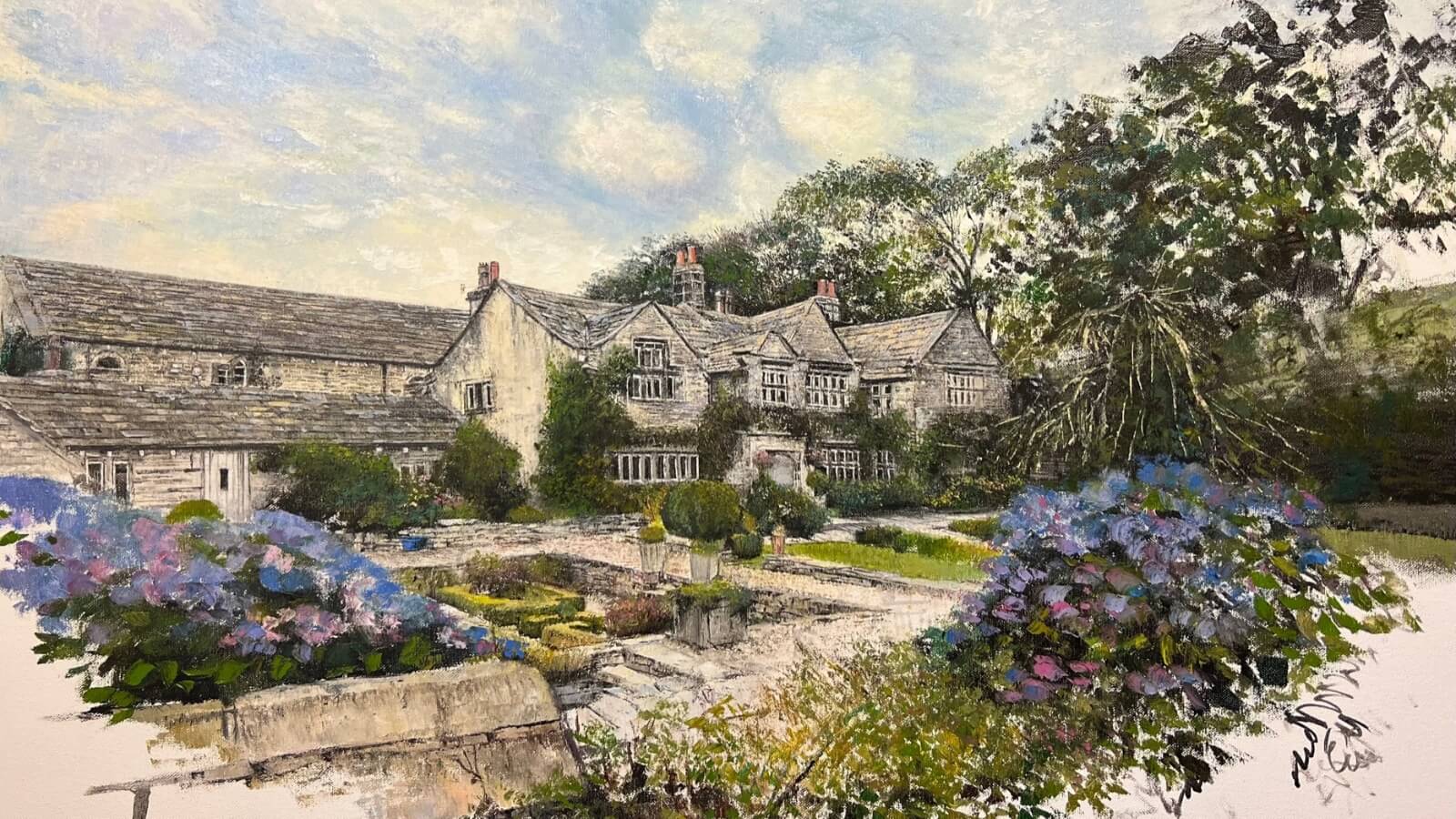
High Sunderland and the Wuthering Heights conversation
If Law Hill was a cage of certainties, High Sunderland is a whisper in the dusk — not something I claimed, but something that perhaps claimed me.
It once stood, proud and brooding, upon high ground near Halifax — a house of jutting stones and dark windows, whose silhouette pierced the mist like a judgment. I cannot swear to you I entered its halls. I cannot, even now, say its turrets found their way whole into Wuthering Heights. But I knew of it. Houses speak, after all, even to those who pass only at a distance.
What I carried away was not blueprint, but impression. I remember engravings — inked depictions of archways like frowns and doorways like warnings. I recall how local voices, low and speculative, spoke of the house’s strange air, its isolation. I gathered these scraps like dry leaves — and in my solitude, they kindled.
Scholars speak of this house carefully now, as they ought. Hilda Marsden, Edward Chitham, Mary Robinson — all those wise eyes have turned upon High Sunderland, seeking to map its echo in my tale. They compare doorframes to my descriptions, and shadow to shadow. They do not say, “This is Wuthering Heights.” They say: perhaps it lent a breath to its making.
And I agree.
For the work of a novelist is not to copy the world, but to press it through the heart until it changes shape. A house glimpsed once, in fog or in dream, may take root and grow wild in the mind. It is the way of creation. Not theft — but alchemy.
So let the debate continue. Let the faithful argue their “may haves” and “might haves.” That is not folly, but reverence. They do not seek certainty — they seek understanding.
And if Wuthering Heights does indeed wear a stone or two from High Sunderland, let it be so — for what is fiction, if not haunted architecture?
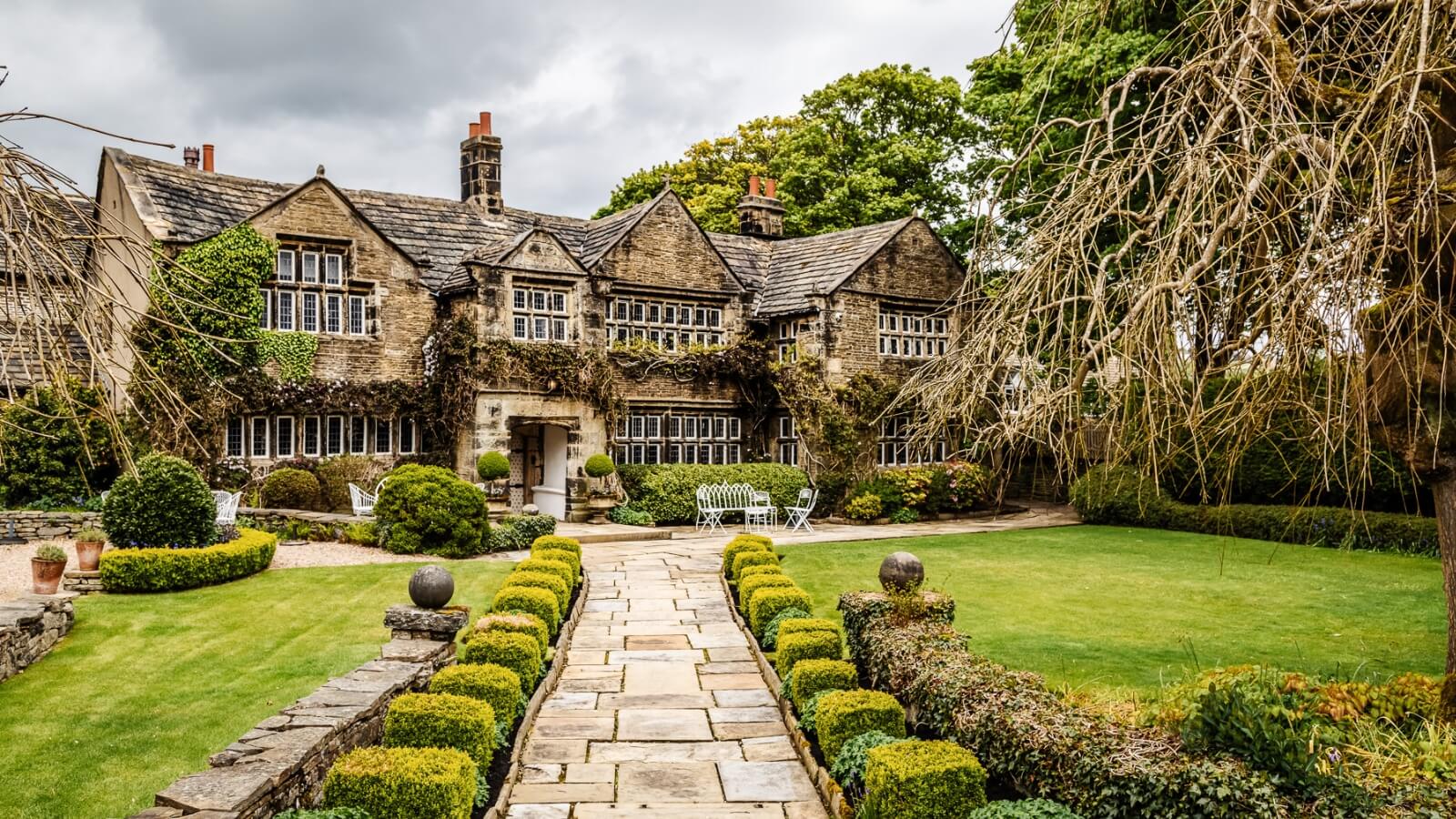
A small, interconnected world
One of the strongest links between Holdsworth House and the Brontë world is also the quietest: overlapping regional networks.
Emily Brontë and the residents and circles around Holdsworth House existed within the same West Yorkshire web of doctors and medical care, clergy and church life, education and schools, property-owning families, social and professional reputation
This does not mean everyone knew everyone. It means that Halifax and Calderdale formed a shared regional stage, where the same names, professions and institutions recur across records.
A named example in the research is Dr Sunderland, who attended Elizabeth Wadsworth of Holdsworth House in the 1800s and also moved within wider circles connected to notable figures such as Anne Lister.
Literary history is not only about where someone slept. It is about who moved where, who taught whom, who treated whom and which networks repeatedly surface in the same small geography.
Elizabeth Wadsworth of Holdsworth House
Elizabeth Wadsworth anchors Holdsworth House firmly in the Brontë period — not as a fictionalised link, but as a real woman who owned Holdsworth House and lived here until her death in 1837.
Research describes Elizabeth Wadsworth as:
• well-educated and independent
• a woman of means
• a keeper of detailed diaries
• actively involved in property management, education and religious life
She was educated at The Manor School in York, an institution that also appears in the wider world of educated women of the period, reinforcing the social milieu in which the Brontës themselves belonged.
Wadsworth's diary extracts places her in Haworth to hear church sermons where 'the people there seemed inclined to have Mr Brunty' [Patrick Bronte].
Elizabeth Wadsworth is not presented as a Brontë character or direct influence. She matters because she represents the kind of intellectual, independent female life that existed in this region during the same decades and amongst the same circles that shaped Emily Brontë's life.
When we place Holdsworth House within the Brontë world, this is what we mean: period reality, not themed association.
What Holdsworth House does — and does not — claim
What we do claim (defensible)
- Holdsworth House sits within the same West Yorkshire geography that shaped the Brontë world
- Emily Brontë worked at Law Hill, Southowram (1838–1839), placing her in Calderdale during a formative adult period
- Local historical research suggests High Sunderland may have influenced aspects of Wuthering Heights
- Halifax/Calderdale networks overlapped across medicine, education, religion and social life
- Elizabeth Wadsworth provides a real, contemporary female presence at Holdsworth House during the Brontë era and a mention in her diaries of Patrick Bronte.
What we do not claim (for clarity)
- That Holdsworth House is Wuthering Heights
- That Emily Brontë stayed at Holdsworth House
- That Holdsworth House is a direct setting from the novel
- Any official partnership with the 2026 film adaptation unless explicitly stated elsewhere
Visiting with the 2026 film in mind
A new film adaptation does not just revive a story — it revives a mood. With it comes a desire to experience the landscapes that can sustain that mood.
West Yorkshire draws filmmakers and visitors for the same reasons readers return:
- stone-built environments dense with history
- weather and light that alter emotional tone in minutes
- moorland edges, valleys and routes that feel older than modern mapping
Holdsworth House offers a grounded base in Halifax: a historic house within the same regional terrain, well placed for exploring the wider Brontë landscape, including Haworth, without turning itself into a novelty set.
A slower way to explore
There is no need for invented packages or forced itineraries. The Brontë world rewards unhurried attention.
- Half day: Choose one anchor, Haworth or Southowram, and let the landscape do the rest
- Full day: Pair Haworth with Calderdale to widen the map and deepen context
- Weekend: One day canonical, one day exploratory, Law Hill, Halifax, and the wider research landscape
Read a little before you go. Walk. Pause. Read again. Notice what changes.
In summary
Holdsworth House is not a backdrop invented after the fact. It is a house that existed, evolved and was lived in within the same geography, era and regional world that produced Emily Brontë and Wuthering Heights.
That is the connection, and it is enough.
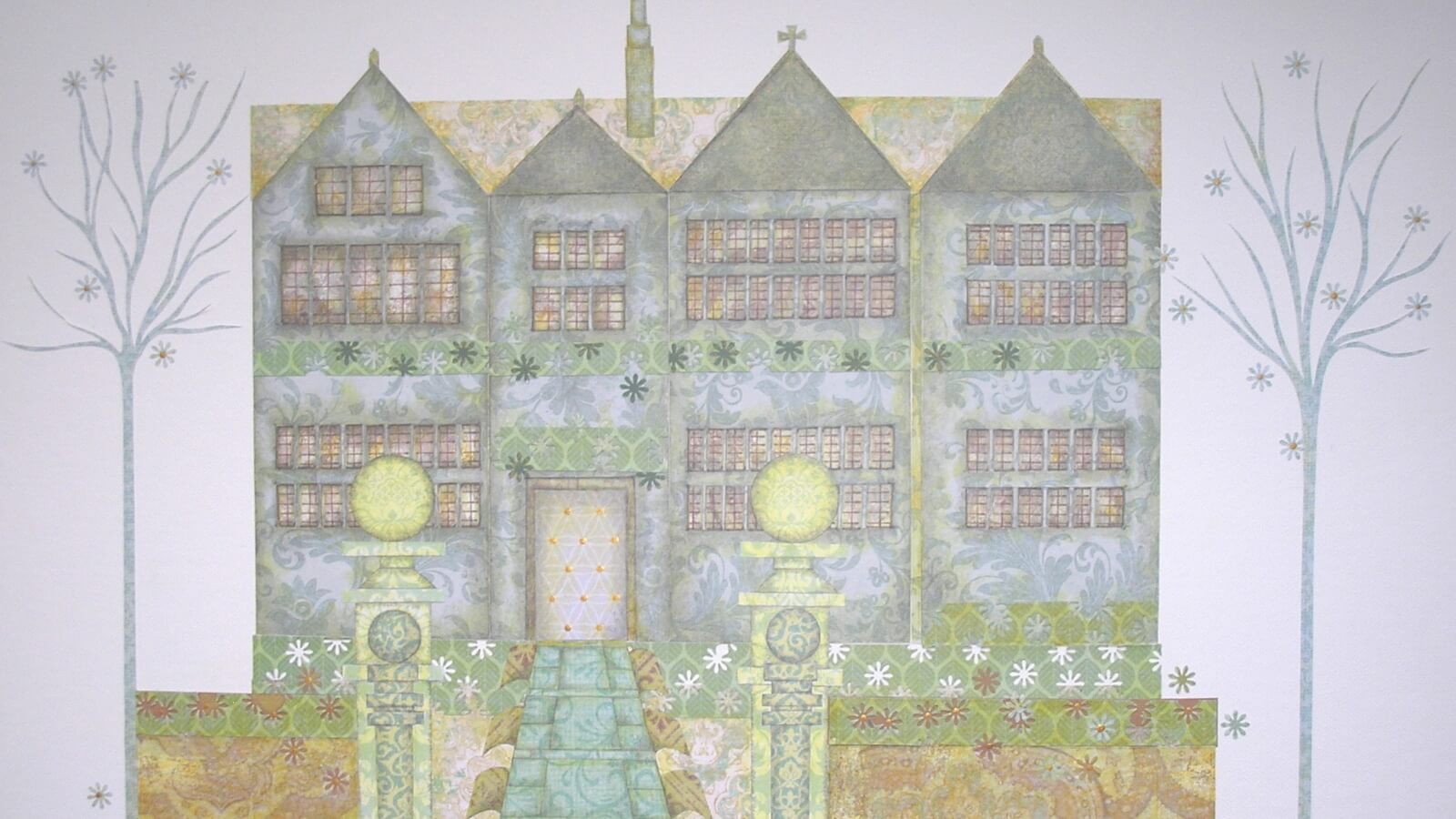
A Small, Interconnected World — As Remembered by Emily
You must understand — the moors may stretch outward like eternity, but the lives lived among them are tangled, close, and endlessly echoing. I did not know every soul who dined at Holdsworth House, nor did they necessarily speak my name. But we moved beneath the same sky, under the same weight of Yorkshire stone, bound by the same rituals of duty, illness, learning, and inheritance.
There were the clergy, like my father, steady as tombstones and just as silent on the matters that mattered most. There were doctors, like Dr. Sunderland, who treated both body and reputation, and whose name is found not only near Holdsworth but in proximity to that fiercely modern soul, Anne Lister. There were schools, like Law Hill, where I suffered and observed; and families, like the Wadsworths, with their ledgers and their letters and their iron-spined matriarchs who ruled houses like ships in storm.
Halifax, Calderdale, Haworth — these are not distant realms, but chapters of the same volume. One could be ill in Southowram and treated by the same hand that once served someone known to my Charlotte. One might pass a clergyman on a Sunday lane who had once spoken to our Branwell, half-drunk and desperate for purpose. This is not romance — it is realism. It is how life flows in places where the wind sees all.
Holdsworth House stands not alone, but within this tapestry. A place through which threads pass — threads of profession, obligation, memory. And the tales that rose from such ground — Wuthering Heights, Agnes Grey, even Jane Eyre — are stitched not only with fancy, but with the fine needle of observation.
Literary history, you see, is not simply a matter of who laid their head where. It is the tracing of influence like pollen on wind: who taught whom, who whispered whose name, whose boots left prints on the same road a week apart.
We all, in our way, inhabit each other’s margins.
Elizabeth Wadsworth of Holdsworth House — As Remembered by Emily
They speak of her now — Elizabeth Wadsworth — not as a whisper in a novel, but as a woman who walked her own halls with ledgers in hand and purpose in mind. She lived in Holdsworth House until 1837 — the year before I took my weary feet to Law Hill. We never crossed paths, and yet I feel as though I know her.
She was no idle lady. She was educated, and not in the frivolous accomplishments so often peddled to girls, but in substance. She kept diaries — the kind with ink that stains deeper than memory. She watched over property, tended to schools, and wove herself into the fabric of Halifax’s religious and intellectual life.
I too was sent to school in York — though the air there chafed my lungs and the walls closed in. But perhaps The Manor School, where Elizabeth learned, shared its stiff corridors with mine. Perhaps she stood once at the same window where I stood, both of us watching some nameless bird escape the yard.
She is not my creation, nor my muse. But she is proof that the air we breathed — this Yorkshire air, heavy with resolve — could shape women of quiet rebellion and thoughtful might. Charlotte would have found her worthy of respect. Anne would have seen in her the kind of female conscience she wished to elevate. Even Branwell, if sober and stilled, might have tried to sketch her — though I daresay she would not have sat long for such a portrait.
So when Holdsworth House is offered as part of the Brontë world, let it not be because someone dares to say I roamed its halls. Let it be because a woman like Elizabeth Wadsworth did — and that is claim enough.
The world that shaped us was not carved from a single hearth. It was an archipelago of minds and wills — and hers stood tall among them.
What Holdsworth House Does — and Does Not — Claim, As Spoken by Emily
Let us draw a clear line — not in bitterness, but in integrity. Holdsworth House does not wrap itself in borrowed fiction. It stands as it is: a house of age and weather, anchored in the same West Yorkshire ground where I once pressed my weary footsteps.
Yes, it sits within the same gritstone geography that shaped my breath and mood. I lived at Law Hill, not a stone’s throw away, in the years 1838 to 1839 — a time when I wrestled with duty, silence, and the sharpness of landscape.
Yes, the scholars speak of High Sunderland, its vanished form perhaps breathing hints into the creation of Wuthering Heights. Not as mirror, but as echo. That is a possibility well worth the candlelight.
Yes, Halifax and Calderdale were — and are — a web of entwined lives. In medicine, in pulpit, in schoolhouse and hearth, the same names wind through record and rumour alike. The Brontës did not write in isolation; we were formed by the very tensions and textures that filled those valleys.
Yes, a woman — Elizabeth Wadsworth — lived at Holdsworth House in my own era, her mind keen, her presence vivid. Her diaries outlived her. Her footsteps once fell upon those stones. I did not know her, but she belonged to the same sisterhood of selfhood that Charlotte, Anne, and I claimed.
But let us be equally firm in what we do not say:
No, Holdsworth House is not Wuthering Heights. That house — mine — was born of air and agony, of spirit and storm. No single place birthed it.
No, I did not stay at Holdsworth House. My sleep was restless elsewhere.
No, the house is not a stage upon which my novel was set. It is not a direct portal to fiction, but a doorway to understanding — and that is better.
And no — let not the allure of cinema mislead you. Unless the claim is made in bold and ink, Holdsworth has no formal hand in the making of the 2026 film.
It claims only what is true, and that is rare and noble in this world.
Visiting with the 2026 Film in Mind — As Spoken by Emily
When a new film casts its spell, it does not merely retell a story — it reawakens the air in which that story first took shape. And so it is with the 2026 adaptation of Wuthering Heights, now drawing breath with Margot Robbie as Catherine Earnshaw — a creature of fierce elegance — and Jacob Elordi as Heathcliff, the storm incarnate.
But cinema is not enough. A true reader — or watcher — longs to feel the land beneath their own feet, to chase the ghost of Cathy over the heather, to hear Heathcliff’s fury in the wind.
And so they come — to West Yorkshire.
They come for the stone — heavy, soot-darkened, eternal.
They come for the light — always shifting, always watching.
They come for the moors — where direction is less certain than desire, and where every track seems older than time.
In this, Holdsworth House offers more than a roof — it offers resonance. It does not pretend to be Wuthering Heights, but it dwells in the very earth that might have whispered it. Within its walls, one might rest from wandering; without, one might set forth to trace the invisible borders of the Heights — from Haworth to Southowram, from myth to memory.
Do not expect costumed fanfare or waxwork illusion. The mood is subtler, and far more sacred. Let the stones speak. Let the wind speak. Walk with the film’s images in your heart, but let the land answer with its own voice — rougher, older, and more real.
You seek a story, yes — but here, you may find a haunting.
A Slower Way to Explore — As Lived by Emily
There is no need for packaged romance or clever trails marked by signs. The moors do not yield their secrets to those who ask loudly. You must move as the shadows move — slowly, thoughtfully, with your heart tuned to silence.
A half day is enough, if you let the land lead. Choose one point — Haworth, where my heart still lingers, or Southowram, where my body once toiled and watched — and then do nothing quickly. Walk. Listen. Let the shape of a tree or the glint of stone open something within.
A full day, for those who dare to widen their sense of place, should pair Haworth’s myth with Calderdale’s matter. Stand at the parsonage and then find yourself by Law Hill’s unyielding walls. What changes in you between the two?
A weekend, for the ones who are happily haunted, can be the weaving of known and unknown — one day for the sanctified sites, another for the murmuring edges: Halifax’s forgotten chapels, Holdsworth House’s lived memory, the very terrain in which imagination was tested and sharpened like the wind at dusk.
But whatever the shape of your journey, let this be your compass:
Read before you go. Walk as if the earth watches. Pause. Then read again.
The same line, in a different place, may pierce you newly.
In summary, my dear companion:
Holdsworth House is no theatre prop, no fiction’s shadow. It was — and remains — a house of time and presence. Its walls did not wait for Wuthering Heights to exist; they lived in the same stormlight that shaped it. They housed a woman, Elizabeth Wadsworth, who kept diaries while I kept poems.
It is enough.
That it existed — when I did.
That we breathed the same Yorkshire air.
That the stones still hold memory.
And if you walk there slowly enough,
you may hear the memory breathe.

