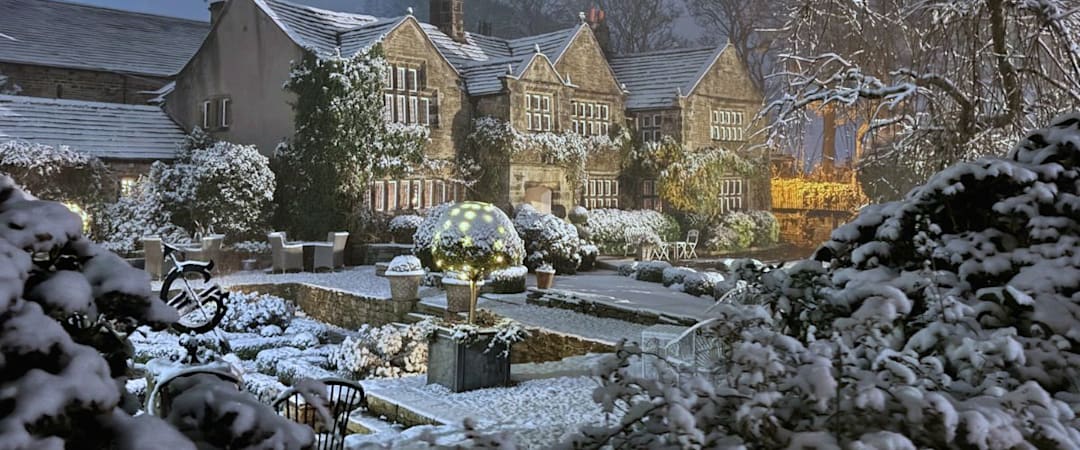
The story of Holdsworth House
A hamlet called Aldworth, a timber house with eight crucks, the stone manor Abraham Brigg finished in 1633, two hundred years of Wadsworths, a diarist who took tea with Dorothy Wordsworth and shared a hairdresser with Anne Lister, a country club, the Beatles, and the family who have looked after the house since 1962. Slide the rail below to move through the centuries, or read it straight through.
Holdsworth House has always been independently owned. From 1633 to 1963 it was the home to numerous families of wealth and distinction. In 1962 the manor was bought by Rita and Freddie Pearson who opened it to the public in 1963 as The Cavalier Country Club. Today the Pearsons' daughters continue to take an active role in preserving the house's history, character and success. We are proud it is one of Yorkshire's leading four star hotels.
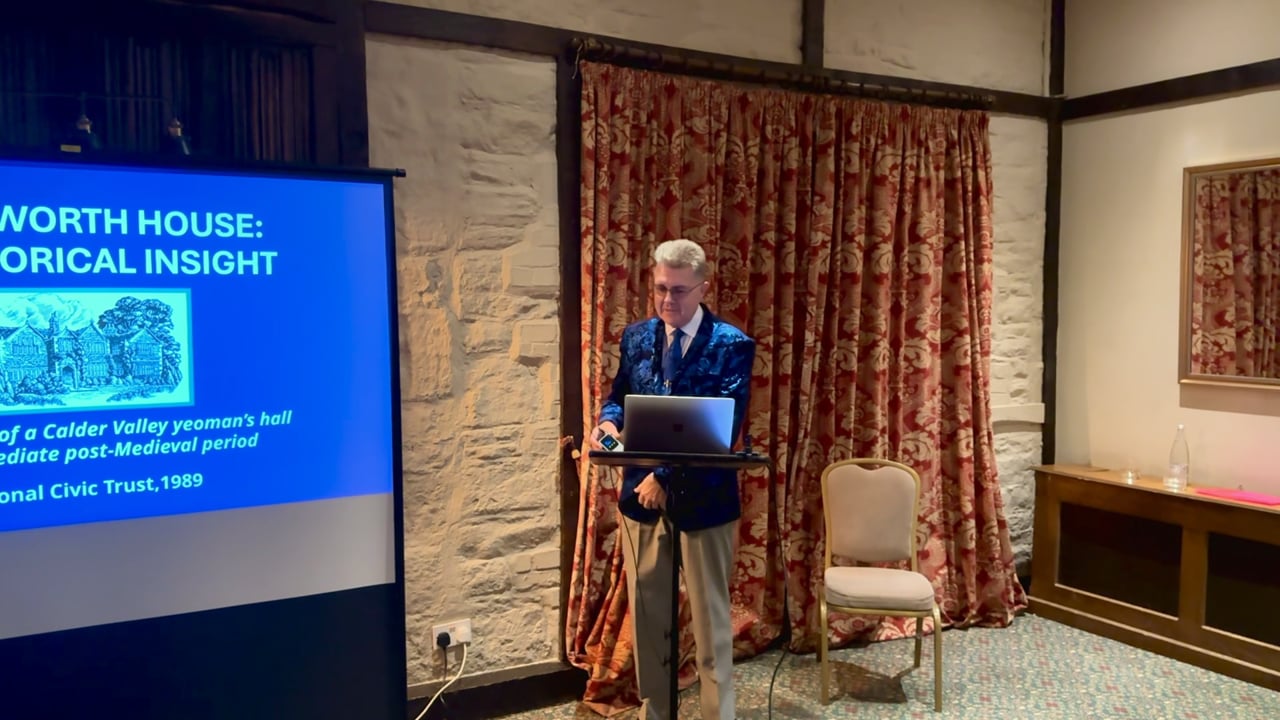
“A fine example of a Calder Valley yeoman's hall of the immediate post Medieval period”
National Civic Trust, 1989

Before the house
A hamlet called Aldworth, and the family that took its name.
The site, on which the house now stands, was first mentioned in documents as far back as 1275, in the court rolls of the Manor of Wakefield, when the De Aldworth family held land in the hamlet (an older account has them paying six old pence for 2½ acres). The name Aldworth refers to old estate or farm. The hamlet was originally called Haldworth - a Saxon name. Aldworth became Holdworth, and the name had reached Holdsworth by 1440.
What the records add
The court rolls of the Manor of Wakefield, which took in the whole Halifax area and were kept by the lord of the manor several miles to the east, begin in 1274. The settlement of Holdsworth in the township of Ovenden, in the parish of Halifax, appears in them the following year, 1275. It is the place that was recorded, not a building: there has been a Holdsworth of some kind for seven and a half centuries, but nobody can say what stood here then.
Nor was it Holdsworth. The place was Aldworth, and the people who lived in it took the surname De Aldworth, "of Aldworth". In the manorial and other records Aldworth became Holdworth, then an S crept in, and the name had reached Holdsworth by 1440, when there was a family of that name in the district. The Halifax Courier, writing when the Cavalier Country Club opened in 1963, named the first owner on record as William de Aldworth in the 13th century, and said that in old documents the house was referred to as Aldorth or Aldworth.
Look for

The Cross of Malta
the east gable, outsideThe cross on the hotel's gable denotes that, at some distant time, the estate was in the hands of the ancient Order of the Knights of St. John of Jerusalem. Such properties contributed to the welfare of the Crusaders and houses bearing this ornament were said to be under the cross.
See it in the 3D tourLocal
Halifax was a township of the huge parish of Halifax within the Manor of Wakefield, a scatter of farms and hamlets on the hillsides above the Calder, already weaving wool. The first record of Holdsworth, in 1275, falls in the third year of Edward I, the year of his first Statute of Westminster.
National
Edward I, three years on the throne; the age of the castle builders, with Caernarfon and Conwy begun within the decade.
World
Marco Polo set out for China in 1271 and was still travelling when the De Aldworths paid their sixpence.
From our History Booklet (2023), as printed
Medieval England
Although the current stone house was completed in 1633, it was built on a site first mentioned in documents as far back as 1272. Then, it was just a small farm with a number of barns and it wasn’t until 1435, when the land was leased to a William Greenwood, that plans were made for a stone house to replace the timber one that stood here originally.
The timber house and the Knights of St John
Eight crucks, a penny a year to the Knights, and a cross that outlived them.
A timber house stood here before 1435. In 1432 a lease was granted for 'Huldisworth Inge' to a William Greenwood, and in 1435 the lease of the close called Holdsworth Ing was granted by the trustees of Richard Bairstow of Brownhirst to William Greenwood of Mixenden; the house was to have eight crucks.
"In 1432 a lease was made of 40 years for Huldisworth Inge in the township of Ovenden at 20s a year to William Greenwood of Mixenden by William Otes." (Greenwood Genealogies 1154-1914, privately published in 1915 with no author)
Plans were made for a stone house to replace the timber one. When Greenwood took on the lease he was ordered to pay rent of 1d to the Knights of St John of Jerusalem, a Catholic military charity that cared for the sick, poor and injured. A Maltese cross was included in the house design on the east gable to signify being 'under the cross' and its membership of the Order.
The full list of owners of Holdsworth Ing, from 1435-1628, is unclear but it's suspected that families of wealth and distinction occupied the land. One family connected with the place was that of the rich but unfortunate Vicar of Halifax, Dr Robert Haldesworth, who would have been descended from a family that lived at Holdsworth and who was murdered by thieves at Halifax vicarage in 1556. Haldesworth was buried in the south chapel of the magnificent Halifax Parish Church (now Halifax Minster). We do know that a John Whitley of City Fold in Wheatley, Halifax is known to have paid the Knights of St John rent charge in 1628, so it's likely that he lived here at that time.
What the records add
A timber house stood on or near this spot before 1435. In that year the lease of a close called Holdsworth Ing was granted by the trustees of Richard Bairstow of Brownhirst, up near Mixenden, to William Greenwood of Mixenden, and the house was to have eight crucks, the great curved timbers that formed its frame and its gables. No obvious trace of it has been found, and nobody has yet looked at whether the timbers of the present house include any of its predecessor's. Shibden Hall, which dates from about 1421 and did not get its stonework until the early 1500s, is the nearest idea of what it may have looked like.
Dr Robert Holdsworth, vicar of Halifax from 1525 to 1556, who met a violent death, would have been descended from a family that lived at Holdsworth three or four generations before him, though his own family cannot be traced to this site. His coat of arms is in Halifax Minster: a tree trunk set at an angle, and David Glover has never seen another like it.
We know the names of some early owners and residents of Holdsworth, but not a complete list, and there is some doubt about who was here when, because the people recorded as "of Holdsworth" may have owned one house or several.
At some stage a house on this site came under the ownership of the Order of the Knights of St John of Jerusalem, the Knights Hospitallers (not the Templars), who held land all over the country, the manor of Batley among it. A tribute rent was paid to them for the property, as it still was by John Whitley of City Fold in 1628; the Yorkshire Observer in 1949 gave the traditional figure as a penny a year. Being a tenant of the Knights brought privileges, among them the right to grind your corn where you chose rather than at the lord's mill. The Knights' right to hold property in England ended at the Dissolution of the Monasteries in 1540, and their property here passed to the Manor of Batley, so by the time the house was rebuilt in stone the Order was long gone. Their emblem, the cross so often called the Maltese cross, is on the gable all the same, and it survives on other old houses once connected with them, Field House in the Shibden Valley for one. In the 1950s the cross was recreated in glass in a window of the house, with the date 1633 beside it.
Look for
The glass cross
a window to identify (the slide shows leaded glass with "16 33" either side of the cross)In the 1950s the Maltese cross was recreated in glass in a window of the house, with the date 1633 beside it.
Local
the Halifax Gibbet was in use through this whole period, and the last two men were beheaded on it in 1650, seventeen years after Abraham Brigg rebuilt the house. "From Hell, Hull and Halifax, good Lord deliver us."
National
Henry VI on the throne when the lease was signed; the Wars of the Roses (1455 to 1487) fought partly across Yorkshire; Henry VIII's dissolution of the monasteries, which suppressed the Knights of St John in England in 1540, though the rent charge to the Order was still being paid here in 1628.
World
Gutenberg's press (1450s), Columbus (1492), the Armada (1588), Shakespeare writing through the 1590s and 1600s.
Abraham Brigg builds the house
The stone house, the porch, the gazebo, and a man called Prevailed who gave way to drink.
The Whitley family and the Brigg family were connected by marriage and in 1633 Holdsworth House came into the possession of Abraham Brigg who rebuilt it. The date 1633 is carved into the headstone of the porch; the initials AB were once beside it, but had weathered away by the 1940s. Abraham Brigg lived here for over 20 years but is said to have wasted his estate and given way to drink. In 1657 Brigg sold to Henry Wadsworth of Peacock House in Warley and went to keep an alehouse in the town.
What the records add
Abraham Brigg came from Grindlestone Bank, above Mixenden on the far side of the valley below the Moor End Road, where he had recently built a fine early 17th-century house that still stands, altered a little, on a lane few people walk. The money is thought to have come from textiles. By 1633 he had bought the site of Holdsworth House, or the timber house on it, and begun to build; the year of the hall's completion is cut over the porch, faint now. The Yorkshire Observer of 13 August 1949, in its series Notable Houses of West Yorkshire, said that Brigg had encased the earlier house in stone and, like most of his contemporaries, left his initials and a date above the porch; by 1949 time had weathered the letters away, so that older histories had to be relied on for the "A.B.", and only the date 1633 could be read.
A suggested ground plan of Brigg's house was published by the Halifax Antiquarian Society about a century ago: an open porch at the front, a through passage running right across the house, rooms to either side. It is a suggestion rather than a certainty, because the inside of the house has been altered so much, with walls added and walls taken out when it was divided in two in the late 19th century, that the original layout is not easy to read.
Brigg fell foul of Oliver Heywood, the Puritan minister at Coley Chapel in Cromwell's time, who was ejected in 1662 for refusing the Act of Uniformity, preached wherever he could, was jailed more than once, and kept a diary full of the misdeeds of his neighbours. It is Heywood who tells us that Abraham Brigg wasted his estate, gave way to drink, sold the house at Holdsworth and went to keep an alehouse in Halifax. He was known by the curious nickname "Prevailed", which has a Puritan ring to it, like a man who has overcome the devil.
The 17th-century gazebo in the garden has nothing else quite like it in Calderdale; dovecotes, yes, but not this. What it was built for is still open, though it would always have been a pleasant place to sit, and the roof space held pigeons.
Look for
The date stone
the porch, outside the front doorThe initials AB and date 1633 carved into the headstone of the porch.
See it in the 3D tour
Stone mullioned windows, beamed ceilings and fireplaces
You'll discover stone mullioned windows, beamed ceilings and impressive fireplaces that all add a sense of calm, comfort and tradition.
See it in the 3D tour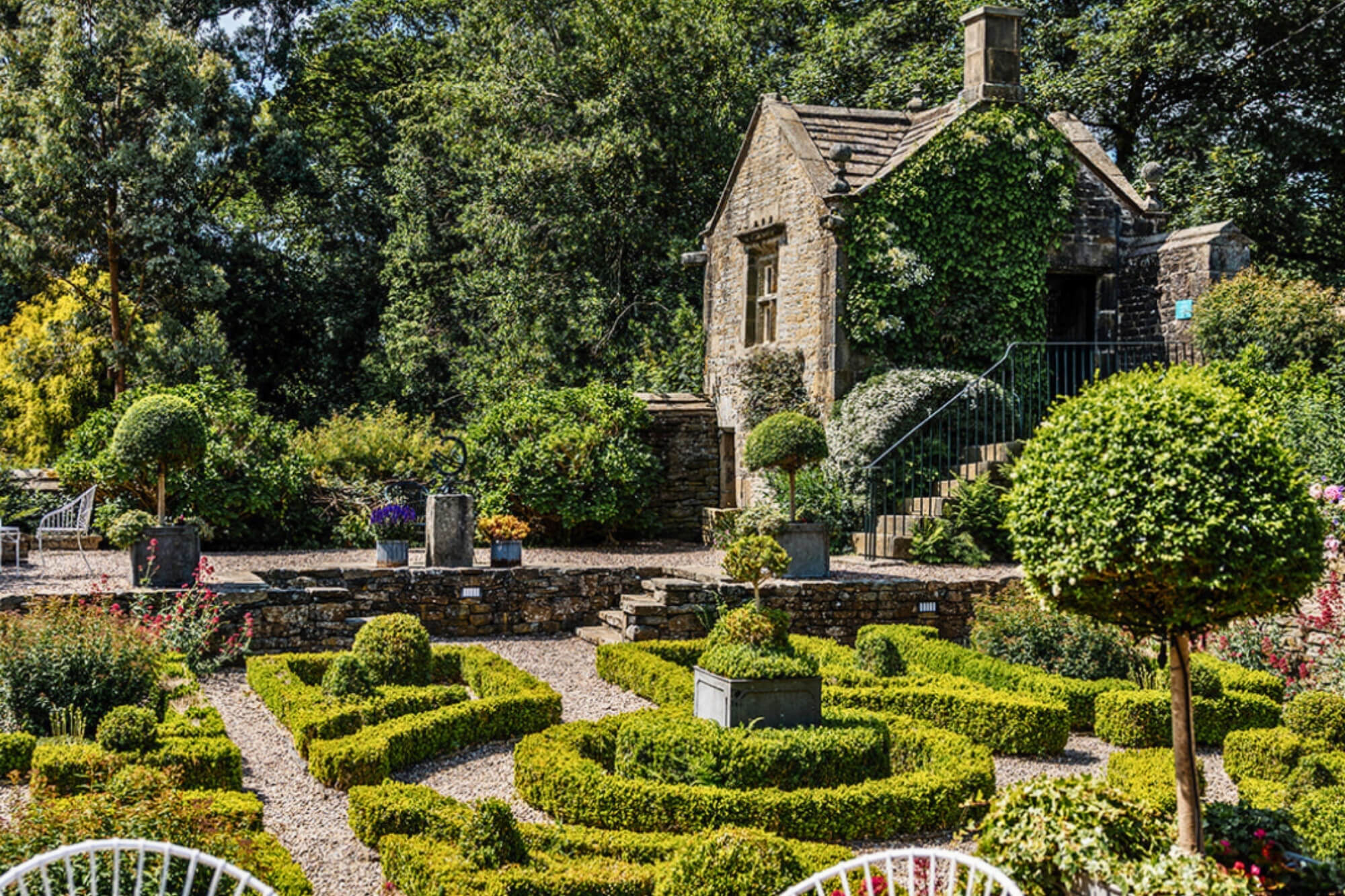
The Gazebo
The delightful four-gabled Gazebo in the corner of the hotel's sunken garden was probably built a little after 1633. There are several suggestions as to its original use: either as a summerhouse, a gatekeeper's lodge or a small private chapel. There is a legend that a tunnel ran from the main house to the Gazebo, used during times of religious persecution. There may well have been a 'priest hole' behind one of the fireplaces in the main house at one time.
See it in the 3D tour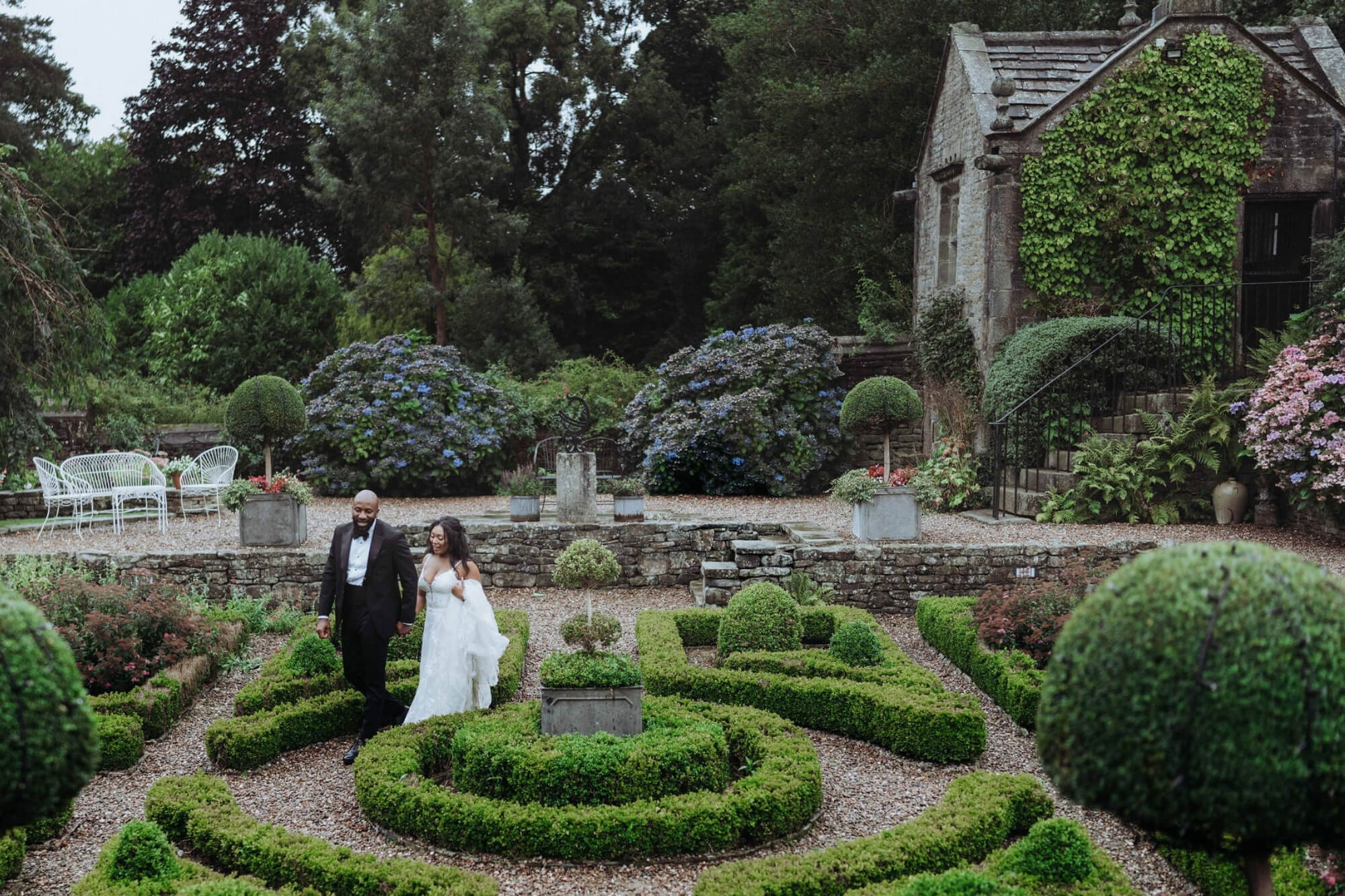
The Parterre Garden
To commemorate the hotel's 35th anniversary in 1997, the period Sunken Parterre gardens at the front to the house were restored. The design was taken from John Parkinson's book A Garden of Pleasant Flowers published in 1629. The planting includes many contemporary flowers and shrubs.
See it in the 3D tourLocal
the clothiers of Halifax parish were among the richest in the north, building in stone for the first time; the 1630s and 1640s are the great decade of the Calder Valley yeoman halls, of which this is one. Nine years after the house went up the Civil War reached the West Riding; the clothing towns, Halifax among them, mostly took Parliament's side.
National
Charles I ruling without Parliament (1629 to 1640); William Laud made Archbishop of Canterbury in 1633; the Civil War from 1642; the King executed in 1649; Cromwell Lord Protector when Brigg sold up in 1657.
World
Galileo tried in Rome in 1633, the year the date stone was cut; Boston founded three years earlier; the Taj Mahal begun in 1632; Rembrandt painting in Amsterdam.
From our History Booklet (2023), as printed
1633
It was a wealthy man named Abraham Brigg who completed the building of the current house, including the Stone Gazebo, in 1633. Brigg lived at Holdsworth House for over 20 years but in the end he wasted his fortunes, gave way to drink, sold the estate to the Wadsworth family in 1657 and went to set up an alehouse in Halifax. As staunch Catholics, both Greenwood and Brigg had paid deposits and rents to the Order of St John (also known as Knights Hospitaller), a Catholic military order that provided care for sick, poor or injured pilgrims. Indeed, Brigg’s house design incorporated the Maltese Cross - a symbol of the Order, which can still be seen on the gables.
Catholic Persecution
The Stone Gazebo is the four-square-metres, four-gabled building at the southwest corner of the hotel’s Parterre garden. It also bears the Maltese cross and its purpose may have been a gatehouse, a summerhouse or a dovecote. We know, from extensive diaries written by Elizabeth Wadsworth (who owned Holdsworth House in the 1800s), that pigeons were kept in the Gazebo, but it may also have served as a secret chapel in times of Catholic persecution. The Gazebo’s ample loft space, once concealed by a ceiling, is a good-size and would have proved a useful hiding place for a priest looking to escape soldiers. And, whilst it has never been unearthed, it is rumoured there was a secret tunnel leading to the Gazebo from the main house. Holdsworth House in Halifax has been home to families of wealth and distinction since 1633. In this book, we reveal the manor’s intriguing history and the lives of those who have lived here since Medieval England, including the Pearson family’s 60+ years of private ownership and hotel management.
Top: The Stone Gazebo
Left: The Maltese Cross on the main house indicating the house was once ‘Under the Cross’
Centre: Inside the Stone Gazebo
Right: Local school children celebrating the newly designed knot garden in 1998.
Jacobean England
The layout of Holdsworth House has undergone radical transformations over the centuries. In 1633, Abraham Brigg completed the replacement of the original timber-framed house with the current stone manor. In fact, the footprint of the new design was much smaller than the one experienced today. Over time, the manor has been added to and its layout remodelled to serve the needs of its inhabitants. Now, being Grade II* Listed, its architecture is protected.
A Grand, Open Hallway
Abraham Brigg was a wealthy landowner and in 1633 he finally finished his long-planned stone house in a rather grand Jacobean style. With mullioned windows, multiple gables and a large central hall, it was a typical of grand houses of the era. On the ground floor were two parlour rooms plus the house kitchen and ‘house body’. Upstairs were three bedrooms. The architectural plans, found in the Halifax Antiquarian Society of 1942, show Brigg’s house had a single staircase off a central hallway, which was open to the roof and featured a gallery on the upper level to service the bedrooms. The large stone fireplace in today’s Mullioned Room restaurant, would have heated this large, open, central area.
The Wadsworths
Two hundred years of one family begin: a Quaker buried in his garden, a barn, a gateway stone.
We think that Henry Wadsworth bought Holdsworth House for his youngest son John Wadsworth to eventually inherit. John was one of three sons and was born in 1645. He lived here with his wife Deborah. Henry Wadsworth and his elder son Abraham bought up lots more land and houses, including Jumples Mill, Gridlestone Bank, Lane Farm and Fold Farm/Mixenden Hall at Illingworth. As wealthy landowners the Wadsworths were an important Warley family. John Wadsworth was thought to be a Quaker as there's evidence he obtained a license for Quaker Meetings to be held at Holdsworth House. As a result they were considered to be dissidents of the church.
Circa 1650John and Deborah Wadsworth made considerable changes to Holdsworth House. They built the barn in 1689 (today it's The Stuart Room); their date stone bearing the inscription I.W.D. 1680 is on the roofed gateway at the yard entrance, and the barn carried the same initials with 1689. (The barn was however rebuilt in 1897 by Richard Ayrton Woodhead, whose stone reads REBUILT 1897 R.A.W.) John and Deborah had a daughter Elizabeth (year of birth unknown) and one son Henry Wadsworth (born 1697) as well as three infant daughter deaths. Deborah died 1 July 1697 - the year of Henry's birth.
In that same year John went on to marry widow Hannah Hollings - daughter of James Chadwick of Warley who lived at a prestigious address - the Hill. They had a daughter Susannah who died unmarried. John Wadsworth died May 10, 1715 when he was 70 and Hannah died in 1731, she left Holdsworth House to her stepson Henry Wadsworth who was now 18. Henry's sister, Elizabeth, went on to marry into the clergy in Illingworth.
Henry Wadsworth kept Holdsworth House for 50 years and may have been responsible for its interior woodwork and paneling as was popular in the Georgian times. By 1720 he'd married a woman named Mary and had a son John Wadsworth and daughter Esther. Esther married into the clergy at Thornton but returned to Holdsworth House in 1799 when her husband Reverend Joseph Thwaites died.
Henry died in 1765 aged 68 and is buried in Halifax Parish Church in the family vault. His son John inherited the house and, uniquely, after having a university education took a role in the church at Coley, around 13 miles from Holdsworth House, travelling there by pony along the bridal paths.
What the records add
Brigg sold in 1657 to Henry Wadsworth, who bought the house not for himself but for his son, and the Wadsworths would own Holdsworth House for around 200 years, perhaps a little more. They came from Peacock House in Warley, in the upper Luddenden valley.
Hardly any original fittings remain in the house. The door at the top of the stairs known as the door to the wig cupboard is pre-Civil War in style, a typical piece of Yorkshire carving, and may or may not have begun life here; the linenfold panelling in the Stuart Room came in more recently.
Henry Wadsworth was, in the words of his time, "a great Quaker, very rich". He died in 1678 and was buried in his garden. His son John built the Holdsworth barn in 1689 (rebuilt in 1897), and the initials of John Wadsworth and his wife Deborah, with the year 1680, are at the yard entrance. The Yorkshire Observer in 1949 read "I. and W.D. 1680" on the roofed gateway set in the side wall, a gateway of a kind it had not seen elsewhere, and the same letters with 1689 on the barn, additions it credited to Henry Wadsworth and his son.
Many of the Wadsworths were buried in the pathway near the south door of Halifax Parish Church, which we know from Elizabeth Wadsworth's own notes. Henry Wadsworth died in 1715 aged 70. High on the west wall of the Holdsworth Chapel in what is now Halifax Minster is a large monument to the Wadsworth family, put together over many years, with the family's coat of arms at the top and the names of many Wadsworths and of the related Bentley family. It is poorly lit and hard to read, but transcripts exist.
Look for
The barn date stone, I.W.D. 1680
In the barn wall; the barn is today the Stuart Room.
See it in the 3D tour
The wig cupboards
then up the stairsAt the top of the Hall stairs three wig cupboards are set into the wall, which probably date from the early 18th century. Their purpose is self-explanatory.
See it in the 3D tourThe oak panelling
the Panelled RoomHenry Wadsworth's fifty years, and the Georgian woodwork.
See it in the 3D tour
The grandfather clock
The Lister clock at Holdsworth House, by the local Lister clockmaker (no connection to Anne Lister); its twin is at Shibden Hall (from the Anne Lister era page, see the next period).
The yard gateway stone, 1680
the Barn CourtyardThe initials of John and Deborah Wadsworth with the year 1680, at the yard entrance, on the roofed gateway set in the side wall.
See it in the 3D tourThe Wadsworth monument
High on the west wall of the Holdsworth Chapel in Halifax Minster, with the family arms at the top. For a day out, not the tour.
Local
a Quaker household in a parish of chapels and dissent; Halifax's cloth trade growing into the worsted boom that would pay for the Piece Hall; Daniel Defoe rode through in the 1720s and wrote up the hillsides around Halifax as the busiest countryside he had seen, every house a workshop.
National
the Restoration in 1660; the Quaker Act of 1662 made meetings like John Wadsworth's illegal, and the Toleration Act of 1689 allowed them again under licence, which fits the licence he held; the Glorious Revolution; the Act of Union 1707; George I in 1714.
World
the Great Fire of London 1666; Newton's Principia 1687; Peter the Great; the South Sea Bubble 1720.
From our History Booklet (2023), as printed
The Wadsworth Era 1657 - 1837
Abraham Brigg sold Holdsworth House to Henry Wadsworth in 1657, who bought it for his son John. It was John and his wife Deborah who first made major changes to the house from 1660 onward. First, a new kitchen (with another bedroom above it) was built off the back of the house body. Then, in 1680, they built a cottage adjacent to the new kitchen and added the barn (not shown on the plan below). Today the barn is our Stuart Room - the main function room of the hotel. The inscription I.W.D. 1680 is carved into the stone in the barn entrance. One of John Wadsworth’s descendants added the wood panelling to the parlour in the 1700s, which can still be seen today in our Hall and Panelled Restaurant.
The Reverend John and Miss Elizabeth Wadsworth
A clergyman, a diarist, Anne Lister, the Brontës, and the school and the church she paid for.
In 1752 the now Reverend John Wadsworth married Elizabeth, daughter of the Hemmingways of Boldshay Hall - a large estate near Bradford, which was home to several families of influence in the district. The Hemmingways were moneylenders and solicitors and so amassed considerable wealth. John and Elizabeth had three sons (Henry 1754, John 1755 and Samuel 1757) they had one daughter, Miss Elizabeth Wadsworth, baptised at St Mary's, Illingworth, on 6 September 1760. Elizabeth was schooled at the Manor in York and wrote diaries 1817-1829 at the same time as two other local diarists - Caroline Walker and Anne Lister - who were also educated at the Manor school in York, albeit at different times.
Samuel died of consumption in 1774 at Holdsworth House, aged just 18. When Rev. John Wadsworth died in 1782 aged 62, Holdsworth House passed to the eldest of his surviving sons Henry Wadsworth. He lived a bachelor existence here alone as Elizabeth and her brother John and their mother went to live at Stott Hill in Bradford. All three brothers died young and unmarried, John the last of them in 1800. As the last remaining descendent, Holdsworth House passed to Elizabeth in 1800; she had split much of her younger years between Bradford and Halifax and now made the house her main home. Elizabeth's mother died in 1804, when Elizabeth was 45.
Her church-going family was socially well connected and Elizabeth Wadsworth knew many prestigious local families. Her detailed diaries, many of which have survived today (and are held on deposit at West Yorkshire Archive Service), provide a wonderful insight into her financial affairs and daily routines. There is evidence Wadsworth knew the Lister family of Shibden Hall and the Bronte family of Haworth.
"The diary of Elizabeth Wadsworth completes a trilogy of early 19th century diaries written by local ladies, all covering the same period but viewing its events from different angles. Anne Lister wrote from 1815 to 1840, Caroline Walker from 1812 to 1830; and Elizabeth Wadsworth from 1817 to 1829." (Halifax Antiquarian Society 1943)
Elizabeth lived at Holdsworth House for 37 years, was very wealthy and exceedingly philanthropic (Anne Lister's diaries report Miss Wadsworth having an income of £700 per year). Wadsworth built the Popples school in 1816 and visited regularly, herself teaching in an emergency. Elizabeth also established the Ovenden Female Benefit Society and engaged all the ladies of the district as honorary members. She was on personal terms with all the important people of the district - the church and Halifax Minster clergy, the Watkinsons, Turneys, Mitchells, Ramsdens and the Birks Hall family. As a staunch churchgoer, Elizabeth donated most of the money required to build Bradshaw Church.
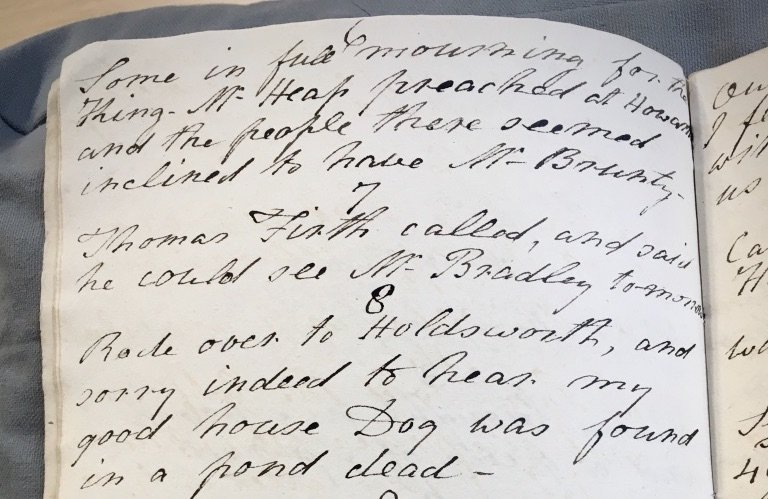
The above diary extract from Miss Wadsworth from 1820 mentions 'Mr Brunty' - Vicar of Haworth Patrick Bronte (born Patrick Brunty at Drumballyroney, near Rathfriland, County Down, and father of Emily, Anne, Charlotte and Bramwell Bronte):
"Some in full mourning for the King. Mr Heap preached at Howarth and the people there seemed inclined to have Mr Brunty."

Anne Lister of nearby Shibden Hall was also a wealthy landowner, spinster and diarist, of similar social standing to Miss Wadsworth. Lister was a more prolific diarist and became posthumously famous because parts of her lengthy diaries were in secret code. The code, once deciphered, revealed a number of Anne Lister's lesbian love interests, which were considered shocking at the time.
It was the work of local historian Helena Whitbread who spent over 30 years decoding Lister's diaries. Anne Lister has since been the subject of a number of TV dramas, the latest was the BBC One/HBO costume drama Gentleman Jack. You can read an excellent BBC page on Anne Lister and the filming of Gentleman Jack here.
Despite being older than Lister when she began writing diaries (Elizabeth was 57 and Anne was 24), it is possible to cross reference dates and events in both Wadsworth and Listers' diaries. Elizabeth notes many of the family names mentioned by Lister. On 27 August 1787, Elizabeth writes:
'Agreeable to an invitation from Dr [James] Crowther I had a pleasant ride with Miss Bainbridge and him to Lightcliffe, where at the opening of an organ in the Chapel we heard the Oratorio of the Messiah well performed, and when it was ended we were introduced by Dr Crowther to Mr. and Mrs. Walker of Crownest [sic], and partook of an elegant cold entertainment given by Mr. Walker to a large company on the occasion. The regale consisted of geese, ducks, chien, hams. Tongues, roast beef, etc., in charges, placed up the sides of a long table, with warm peas, potatoes etc., in a row up the middle were a rich variety of sweetmeats, jellies, flummery, made dishes, etc., and the garden flowers of the season were blended and skillfully disposed here and there in pots between the dishes."
The Walkers of Crow Nest had a daughter, Ann Walker, who later lived at Shibden Hall with Anne Lister as her 'wife', lover and companion.
Elizabeth died in 1837 aged 77 having never married and childless. Her resting place is at Calverley Church. At the time of her death, she owned considerable property in the area. She left Holdsworth House to a young boy (possibly distant relation or the son of one of her farmhands) Matthew Ayrton, in the trust of his parents David Ayrton (listed occupation: farmer) and Hannah Burleigh. Her will required Matthew to change his name to Matthew Henry Wadsworth when he came of age and for Holdsworth House to be kept in the family through inheritance.

Elizabeth Wadsworth, in her own words and David Glover's
The Reverend John Wadsworth. By 1765 the house was owned by the Reverend John Wadsworth, who had three sons and one daughter. He had been to university, the first of his family to do so, and served as curate at Coley Chapel, presumably riding across on a Sunday to take the services. He died in 1782 aged 62. He had married Elizabeth Hemingway of Boldshay Hall in Bradford, at Horsforth in April 1752, by licence. The Hemingways had come originally from the Shibden Valley, close to where the Listers lived; Elizabeth was the daughter of wealthy moneylenders and solicitors, and she brought more property into the family, Boldshay Hall among it. The hall still stands in Bowling, in fair condition, and the children divided their time between Holdsworth and Bradford, where there were other family lands too.
Miss Elizabeth Wadsworth. The three sons of John and Elizabeth all reached adulthood but died young and unmarried, John junior the last of them in 1800. That left their sister Elizabeth the sole survivor, with no other heirs in the family at all. Like Anne Lister at Shibden, a woman came into the estate for want of men, and like Anne Lister she proved an excellent manager of property. Until 1800 she had lived mostly at Stott Hill in Bradford; on inheriting, she made Holdsworth House her main residence. She had been baptised at St Mary's, Illingworth, beside the Keighley Road, on 6 September 1760 (the church has since been converted), and was educated at the Manor School in York, where Anne Lister, more than thirty years younger, would follow. Another of her properties was The Hill in Warley, up a drive behind the Peacock, which had come into the family in 1731; she let farms and houses to tenants and drew a good income from them. In the 20th century The Hill was home to Arthur Pickles, the architect, Mayor of Halifax in 1951 to 1952, brother of Wilfred Pickles and father of Judge James Pickles.
Her pocket journal. A leather-bound Ladies' Pocket Journal for 1784 survives, which Elizabeth used as a notebook for family and other events over many years, writing things in when she felt like it rather than by the date. Its frontispiece shows ladies' frocks and headdresses of 1783, and it carries the almanac matter of the day, the birthdays of George III's family and the rest. In it she records her father's death in 1782 and that of her brother Samuel in 1774, both buried "in the grave of my grandfather near the church door at Halifax", and, in August 1787, the visit to Lightcliffe Chapel for the opening of the new organ at which she met the Walker family of Crow Nest, the family of Ann Walker, who was not yet born.
Her diary. The diary itself is written in plain exercise books (the cover of the first, from 1817, is a printed one about a lieutenant in the yeomanry) and runs from about 1817 to 1829. Anne Lister began on loose sheets, moved to exercise books in the mid 1810s and ended in bound volumes; Elizabeth kept to her exercise books. There is no code in them, no crypt hand, and the handwriting is beautifully clear. She wrote less each day than Anne Lister, but a good deal of interest. These are the entries David Glover read, as his slides print them, with what he said about each.
"Went to Mr. Willmott's… found the dismal tidings too true for Dr. Coulthurst had rode to Mr. Smith's at Heath on the morning of the 10th, and when he got there complained of cold and a pain at his breast, he was persuaded to take a little brandy and water before going to bed, his servant called him in the morning, he said he had been tolerable all night, and bid him come again in a quarter of an hour. He did and found him a corpse"
Dr Henry William Coulthurst was the vicar of Halifax, the man thought to have baptised Anne Lister; Mr Willmott was his curate; Heath is the one near Wakefield, not ours.
"The Christmas Day Singers came into the Garden after three o'clock and played and sang half the Christmas Hymn, very pleasantly ushering in the happy morn. Dined about half-past one o'clock with eight old women and Hannah Ayrton - about three o'clock the School Children came and sung the four last verses of the Christmas Hymn and Evening Hymns and the whole of the 100 Psalm to the Harpsichord, about 80 were served with cake"
The Christmas hymn is Christians, Awake, Salute the Happy Morn. David Glover's feeling, with the order of the entry in mind, is that the singers were in the garden at three in the morning, though he allowed it may have been the afternoon; the dinner for eight old women was probably a charitable one, and the schoolchildren came later in the day. Cake is still served here, he noted.
"Whit-Tuesday attended divine service at Illingworth Chapel. Mr. Moss preached - nearly all both honary and benefit members of our female society were present"
The female society was a friendly society for women, on the model of the men's Royal Georgians in Halifax, to which members subscribed and from which they could draw in hard times; the printed card of the Friendly Female Society, "for the relief of poor infirm aged widows and single women of good character who have seen better days", survives. Mr Moss, the vicar at Illingworth, was a close friend of Miss Wadsworth, and no relation that we know of to the Moss family here now. St Mary's, Illingworth, which she always called Illingworth Chapel, was her regular place of worship when she was at Holdsworth House, and its interior before the late 19th-century extension to the east was much as she knew it; she mentions it many times.
"Mrs and Miss Watkinson drank tea with me and also Miss Grace Mellin"
The Misses Mellin kept a ladies' school at Blackwall in Halifax, opposite today's Trinity Place, in a building still standing, where Anne Lister was educated in 1802 and 1803 and Dorothy Wordsworth before her.
"Mr. Jarry came a second time on his way to Capt. Priestley's"
Étienne Edmé Jarry, born at Versailles in 1775, had sung in the Chapel Royal for Louis XVI and Marie Antoinette, came through the Revolution and a spell as a prisoner of war, and settled in Halifax, where he taught French, here and in Bradford, to people who wanted to learn it from a Frenchman before they travelled. In 1819 he lived at 19 Woolshops and later moved to Akeds Road. He is in Anne Lister's diary too.
"Rode down to Halifax in T. Turner's cart; went to see Madame Tussaud's figures, walked home in evening"
The lady of the manor in a cart. The waxworks were a travelling show, long before the permanent exhibition in London; Anne Lister records seeing it as well.
The entry about the Reverend Brontë that is on the history page above. Elizabeth was acquainted with the family to a degree, and they come up from time to time.
"I sent for Mr. Sunderland" and "Mr. Sunderland gave me some medicine and a small bottle of hartshorn to rub my side"
Dr Sunderland, a prominent Halifax doctor, attended Anne Lister at Shibden Hall, appears as a character in the first series of Gentleman Jack, and worked at the Halifax Dispensary for the poor. Hartshorn was a form of liquid ammonia, more often used as smelling salts.
"At Illingworth Chapel in the morning - Mrs. Shaw, who was Miss Gledhill, made her first appearance after her marriage, having, I am sorry to say, married the widower of her late sister"
Marriage to a deceased wife's sister was against church law and took almost another century to become legal; couples got round it by marrying by licence in a church away from home and hoping nobody made a fuss.
"Went to Bradford. Called upon the Dr, Mrs and Miss Outhwaite and paid my first subscription to the Dispensary just now liberally begun in Bradford"
Halifax, the smaller town by then, had had its dispensary seventeen years earlier. Miss Outhwaite was the godmother of Anne Brontë. Elizabeth had known the family for many years: her appointments diary for 1791 records the marriage at Bradford of Mr Outhwaite, apothecary, to Miss Graham of Exley near Halifax, the parents.
An interjection from Anne Lister's own diary, 26 July 1825: "Miss Wadsworth of Holdsworth in Ovenden … has about £700 a year". Anne Lister took a close interest in what other single women had, and how it compared with her own.
Cousins. In his research David Glover found evidence of a cousinly connection between Elizabeth Wadsworth and Anne Lister, not yet complete because there are too many Listers with the same names. Elizabeth's grandmother was Elizabeth Lister (1710 to 1772) of Little Horton in Bradford, who married Henry Hemingway (1707 to 1784). The Listers of Little Horton descended from John Lister of Little Horton, and the Shibden Listers from Samuel Lister of Shibden Hall, both sons of Thomas Lister of Ovenden and Little Horton, who married Sibella Northend and died in 1606. He is convinced of the common descent and hopes to finish the tree one day.
"Mary and Amos Jowett went to Mr. Jubb's and were inoculated from little John Ayrton and Sarah Blagbrough"
Inoculation against smallpox in its early days, arm to arm; Dr Jubb was another of the doctors who attended Anne Lister.
"Mrs Sutcliffe and Miss Fergusons had Pigeons"
Presumably a gift from Elizabeth's own loft in the roof of the gazebo at the south-west corner of the garden; pigeons were useful winter meat. Anne Lister knew the Fergusons too.
"Miss Ferguson sent me the Rules for the Clergymen's Daughters' School at Cowan Bridge in the parish of Tunstall, on the Turnpike Road from Leeds to Kendall. Miss Wordsworth had mentioned them here"
Cowan Bridge, just off the A65 towards Kirkby Lonsdale, was the school all the Brontë girls but Anne attended. Miss Wordsworth was the poet's sister Dorothy, in Halifax from June to September 1827 and spending much of her time with Martha Ferguson, and "here" means Holdsworth House: evidently the two of them had been to tea. The Miss Fergusons lived at Little Moor in Shay Lane, today's Ivy House, and Ferguson Street near the bottom of Bull Close Lane is named after the family.
"Went to Halifax and called at Mr. Vaslet's. Got our hair cut at Mr. Crossley's"
Mr Vaslet was closely involved in the early days of the Halifax Choral Society. Joseph Crossley, who died in 1837 aged 72 and lies near the south door of the Minster, cut Anne Lister's hair as well.
What she looked like. There is no confirmed image of Elizabeth Wadsworth, or of her family in her time, and David Glover used a silhouette of a Georgian lady in its place. His suspicion, and he would not bet on it, is that she is one of the two ladies with parasols in the bottom right of Horner's engraving of 1835, published two years before her death, standing outside the front door with its 1633. The booklet says the same of the painting on the reception wall: Elizabeth is the figure on the right.
Lady Bountiful. Later in life she inherited Boldshay Hall too, and in the end she had far more property in and around Bradford than in Halifax, though we like to think of her as a Halifax girl. Most of her income came from letting her properties and farmland, and she managed them well. Her disbursements books, in the Calderdale archive at West Yorkshire Archive Service with the diaries, show what she spent her money on. In 1816 she built a schoolhouse, a master's house and other buildings for the education of 30 poor children in and around the hamlet of Holdsworth: Popples School, where the children were to be taught to read and to study religious knowledge as the Church of England taught it, and the girls knitting and plain needlework. She endowed it, visited it periodically to question the children on what they had learned and hear them recite, and it lasted until 1895; the building survives as a house, and the Popples charity still exists. In 1832 she founded the Popples Almshouses, built in a 17th-century style, to house six poor women of Holdsworth, natives or residents, not less than 50 years of age. They are still there, still a charity and still lived in under the old qualifications, a little more enclosed than they were; the plaque on the front was added on their completion in 1840, after her death.
Her silver. Elizabeth's silver teapot, with a cartouche of her initials, and the silver coaster made for it, engraved with her coat of arms (three fleurs-de-lis, like the arms of the French kings but in other colours), together with a small silver seal, were lent by Lynne Sunderland for the night of the talk. They had passed down the female line of the Wadsworths into the Sunderland family and had probably not been in the house since before 1900.
Bradshaw Church. Towards the end of her life she planned a new Anglican church for the growing population at Bradshaw and gave £700 towards it. Designed by Charles Child, a local man, it opened in February 1839, so she never saw it. The Ramsden family of Jumples, the house by today's Mixenden flats, were its other great supporters, a family that gave Halifax councillors and an MP.
Her death. The disbursements book for April 1836 records her receiving the sacrament at home, a sign that her health was failing at 76, though her hand was as clear as ever. She died at Holdsworth House on 5 April 1837, two months before Victoria came to the throne, and was buried eight days later in the family vault at St Wilfrid's, Calverley, near the family's Bradford property, where her parents and all but one of her brothers lay and where her Hemingway ancestors are buried close by. Her table tomb in the churchyard is engraved on all its sides, and the inscription reads that she departed this life on 5 April 1837 aged 77. The vicar who buried her was the Reverend Samuel Redhead, who had been appointed to Haworth in 1819 and driven out within months by parishioners who wanted Patrick Brontë, and who sent a man riding backwards into the church on a donkey to make the point. Redhead went to Calverley instead, and seventeen years later took Elizabeth Wadsworth's funeral.
The will. Her will, a long and complex one, was witnessed by Parker and Adam, who were also Anne Lister's solicitors, and proved at York on 27 November 1837. It left Holdsworth House to Matthew Ayrton, a young man not yet of age, probably a distant relation though the connection has not been worked out, in whom she had taken a great interest, all but adopting him while keeping him at a little distance. He had been baptised at St Mary's, Illingworth, on 8 November 1818 and lived with his parents at Holdsworth House Farm across the road; his father David Ayrton, a farmer, appears again and again in her diaries. David and Hannah Ayrton are buried near the gate of Mount Zion Chapel at Ogden. The will required Matthew to change his name to Matthew Henry Wadsworth, Henry being the name of Elizabeth's father.
Look for
The weeping ash trees
Former resident of the early 1800s, Miss Elizabeth Wadsworth, set three little ash trees from Hipperholme in the front garden in November 1822, as her diary records. One did not survive, and in 2000 the Pearson family planted a replacement, imported from Italy because of their rarity.
See it in the 3D tourLocal
the Piece Hall opened on 1 January 1779, when Elizabeth was eighteen, and both she and Anne Lister wrote about it; the Luddite risings of 1812 in the West Riding; Patrick Brontë took the Haworth living in 1820, the year of her diary line about him, and "full mourning for the King" in that same entry is for George III, who died that January.
National
the loss of America (1776 to 1783), the wars with France and Waterloo in 1815, the Regency (1811 to 1820), George IV, William IV, and Victoria's accession in June 1837, the year Elizabeth died.
World
the French Revolution (1789), Napoleon, the first railways (the Liverpool and Manchester line opened in 1830, two valleys away).
From our History Booklet (2023), as printed
Miss Elizabeth Wadsworth
In 1750, clergyman John Wadsworth III married the wealthy daughter of moneylenders and solicitors from Bradford, which established the family’s affluent social standing. The couple went on to have three sons then a daughter. The Hall staircase today
© What Stacey Did
A Philanthropist and Diarist
Miss Elizabeth Wadsworth was born on 15th November 1760 and lived at Holdsworth House until 1837. Elizabeth inherited the house and other properties from her second brother Samuel, around 1800. Like her contemporary and distant relative, Anne Lister of nearby Shibden Hall, Elizabeth was schooled at The Manor in York and wrote comprehensive diaries that noted her financial accounts and daily social interactions. A wealthy spinster, Elizabeth divided her time between Holdsworth House and Boldshay in Bradford. She donated much of her income from the letting of her properties and farmland to charitable causes. She was responsible for building local almshouses as well as Popples School - the beginnings of today’s Bradshaw Primary. Ground floor layout 1660
Famous Connections
Elizabeth Wadsworth detailed her life across 19 volumes of diary jottings, using school journals and notebooks. Most have survived intact to this day and are held on deposit at Halifax library, alongside Anne Lister’s famous five-millionword diaries. It is noted that Anne Lister wrote in her diaries that ‘Miss Wadsworth of Holdsworth had [an income of] £700 per year’* (around £75,000 per year today). Elizabeth’s diaries reveal close connections to the Walkers of Crownest (Anne Lister went on to marry Ann Walker) and Dorothy Wordsworth - sister of poet William. Wadsworth’s diaries give us a fascinating insight into her life and the times. On February 6th 1820, she writes about King George III and Reverend Patrick Bronte (Brunty) - father to the famous Bronte sisters. Elizabeth Wadsworth is depicted in the painting (opposite, figure right), which hangs on the hotel reception wall. February 6, 1820 “Some in full mourning for the King. Mr Heap preached at Haworth and the people there seemed inclined to have Mr Brunty” February 7, 1820 “Thomas Firth called and said he could see Mr Bradley tomorrow. February 8, 1820 “Rode over to Holdsworth and sorry indeed to hear my good house Dog was found in a pond dead” * W.B. Trigg Halifax Antiquarian Society 1943, The Diaries of Miss Wadsworth. West Yorkshire Archive Service, Calderdale
Below: Photo of the Diaries of Miss Wadsworth, courtesy of The Ramsden Family of Ovenden and Norfolk
The Gardens
The one thing many visitors love about Holdsworth House is its formal garden. The south-facing lawn and sunken Parterre garden make up a quarter of the estate land, most of which is actually meadow or sheep-grazing paddock. We know some of the garden’s history from the 19th century diaries of former owner Miss Elizabeth Wadsworth. But most of the garden today is a result of the creativity and hard work of the Pearson family.
Elizabeth Wadsworth’s Designs 1760 - 1837
Elizabeth Wadsworth’s precious diaries reveal her good control of finances. Wadsworth managed and invested in farmland and cottages locally from which she drew rent from tenants. Her income allowed her to be live well at Holdsworth House, with a team of servants to maintain the house and its grounds. She kept beehives in the gardens and pigeons in the Stone Gazebo. We find reference in Elizabeth’s diaries of the autumn of 1822: “November 11.-Samuel fetched potatoes and 3 little ash trees from Hipperholme. “November 13.-Set the 3 ash trees.”
Weeping Ash
Sadly, one of Elizabeth’s trees did not survive. So in 2000, the Pearson family set about restoring her original design by importing a replacement from Italy. Today, the stunning, twisted canopies provide shade and character to the wooden gazebo that is set beneath its boughs and which hosts outdoor weddings in the summer months. At 200+ years old, the ash trees are under close observation because, sadly, the disease ‘Ash Dieback’ is threatening the species’ survival in the UK.
From our Anne Lister era page, in full
Holdsworth House in Halifax was built in 1633 but the period 1759-1837 is of particular interest. At this time Holdsworth House was owned by the Wadsworth family and from 1817 the daughter, Elizabeth Wadsworth, wrote a diary. It's these volumes that have revealed links with Anne Lister of Shibden Hall and the Bronte family.
Miss Elizabeth Wadsworth
Miss Wadsworth was born at Holdsworth House in 1760, and baptised at St Mary's, Illingworth, on 6 September, to Reverend John and Elizabeth Wadsworth. Her mother was the daughter of Samuel Hemmingway of Boldshay Hall - a large estate near Bradford, which was home to several families of influence in the district. Miss Wadsworth had three brothers Henry, John and Samuel; Samuel sadly passed away (of consumption) in 1774 at the house, aged just 18.
Rev John Wadsworth died in 1782, aged 62 and so as the eldest son, it was Henry who inherited Holdsworth House. He lived a bachelor existence here alone as Elizabeth, John and their mother went to live at Stott Hill in Bradford. Henry and John both died relatively young and so the Holdsworth House estate passed to Elizabeth, but she spent much of her time between Bradford and Halifax, whilst Holdsworth House was let to a tenant. Elizabeth's mother died in 1804, leaving Elizabeth alone. She came back to Holdsworth House, aged 45.
An Influential Church Family
Being from an influential church family, Elizabeth was very well connected socially although she never married, nor had children. Whilst already quite wealthy, she made a living from letting property, farming and selling off her livestock. She was a great philanthropist and distributed much of her wealth to the poor, the needy, the church and in building of Popples School - the beginnings of Bradshaw Primary.
She died at Holdsworth House in 1837, aged 77 and is buried in the family tomb in St. Wilfrid Churchyard, Calverley.
Anne Lister Era
In 1817, aged 57, Miss Wadsworth began writing diaries. She continued writing until 1829 and most of her diaries - written in old school notebooks - have survived (retained on deposit by West Yorkshire Archive Services).
"The diary of Elizabeth Wadsworth completes a trilogy of early 19th century diaries written by local ladies, all covering the same period but viewing its events from different angles. Anne Lister wrote from 1815 to 1840, Caroline Walker from 1812 to 1830; and Elizabeth Wadsworth from 1817 to 1829." (Halifax Antiquarian Society 1943)
Anne Lister of Shibden Hall was also a wealthy landowner of similar social standing to Miss Wadsworth. Lister was a more prolific diarist and became posthumously famous because parts of her lengthy diaries were in secret code. The code, once deciphered, revealed a number of Anne Lister's lesbian love interests, which were considered shocking at the time. Anne Lister has since been the subject of a number of TV dramas, the latest the BBC One/HBO costume drama Gentleman Jack, first shown in 2019.
Lives Intertwined
Despite being older than Anne Lister when she began writing a diary, Elizabeth Wadsworth reports on the same early 19th century period in her journals. It is possible to compare entries in both diaries, for the same dates, to get a wonderful insight into the lives of two rather distinctive ladies. Both Wadsworth and Lister were educated at the Manor School in York, albeit a generation apart, so it was probably not uncommon for ladies of such means to keep detailed accounts of their social and financial affairs.
There are many similarities in Lister and Wadsworth's diaries, and proof that they circulated amongst the same notable families (particularly the Priestley family), had the same doctors (Dr Sunderland and Dr Paley) and both worshipped at Halifax Minster (although Wadsworth also frequented Illingworth Chapel). Both were avid readers, gardeners and musicians; Lister played the flute and Wadsworth the harpsichord. There is evidence of them both visiting town events in Halifax too: the Madam Tussaud's figurines in 1820, and "a very curious exhibition Papyruseum by the late Mrs Aberdeen," as noted by Miss Wadsworth in 1819.
Miss Wadsworth was familiar with Ann Walker's parents; Ann Walker became the long-term lover of Anne Lister who later lived at Shibden Hall with her. On 27 August 1787 Miss Wadsworth wrote:
"Agreeable to an invitation from Dr [James] Crowther I had a pleasant ride with Miss Bainbridge and him to Lightcliffe, where at the opening of an organ in the Chapel we heard the Oratorio of the Messiah well performed, and when it was ended we were introduced by Dr Crowther to Mr and Mrs Walker of Crownest and partook of an elegant cold entertainment given by Mr Walker to a large company on the occasion."
SHIBDEN HALL AND HOLDSWORTH HOUSE Shibden Hall is now a wonderful museum open to the public and just 3.5 miles from Holdsworth House. Shibden Hall dates from 1420, whilst Holdsworth House was built in 1633. However the Georgian influence of their wealthy occupants is certainly in evidence in both properties.

Wood-panelled halls, stone mullion leaded-light windows, low beamed ceilings that retain heat and formal gardens are still being enjoyed today. And that's not where the similarities end. Take a wander around Shibden Hall and you'll see a grandfather clock that's strikingly similar to our own, both made by local Lister clockmaker (no connection to Anne Lister). The Panelled dining room at Holdsworth House also bears an uncanny resemblance to the dining room at Shibden Hall.


Elizabeth Wadsworth's Literary Links
The early 1800s was a time of great army captains like Wellington and Lord Nelson (and of course a Duke of Wellington's Regiment was based in Halifax). Elizabeth Wadsworth makes references to these great names in her daily observations of the news.
Other names interwoven in Miss Wadsworth's life include Dorothy Wordsworth who lived in Halifax (the sister of poet William Wordsworth) with whom she drank tea on occasions. Through her links with the churches in Bradford and Haworth, Miss Wadsworth was acquainted with Patrick Bronte and his wife Maria, parents of Charlotte, Emily, Anne and Bramwell.
Visit To Find Out More
There's so much rich history to discover in Halifax and a break at Holdsworth House lets you fully immerse yourself in the era of Anne Lister and Elizabeth Wadsworth. You'll enjoy a most comfortable overnight stay, and our bar and restaurant too. Our Shibden Hall break provides an overnight stay with dinner and entry for two adults to Shibden Hall.
We highly recommend a trip to Shibden Hall in Halifax and the Bronte Parsonage Museum in Haworth. Whilst you're here, visit The Piece Hall (mentioned in both the Lister and Wadsworth diaries), Bankfield Museum and the Duke of Wellington's Regiment Museum too.

Sleep where the Wadsworths did
The house has 32 bedrooms, the Panelled Room for dinner, the Hall for a drink by the fire, and the gazebo for breakfast on a fine morning. Our dinner, bed and breakfast breaks are the easy way in.
The Victorian Wadsworths
A farmer's son who had to change his name, a house divided in two, and a son gone to Canada.

Matthew Henry Wadsworth (formerly Matthew Ayrton) lived his life at Holdsworth House and married Sarah Firth (pictured). Their marriage certificate lists Matthew's occupation as a farmer. Matthew died 19 October 1860 aged 42, leaving his widow Sarah and six children (including a girl he had named Elizabeth Wadsworth). He died relatively poor and instructed that his assets be sold and the money used to look after his family. However Holdsworth House - under the instruction of Elizabeth Wadsworth - had to pass to his eldest son John Henry Wadsworth. Sarah Firth went on to marry again to Abram Sunderland.
John trained as an architect but wasn't very successful and the value of the family estate dwindled. Holdsworth House and its contents were passed down to Henry Hodgson Wadsworth who became a solicitor and emigrated to Canada.
In 1877 the house's inventory was amassed and subsequently the house was divided and let to tenants, the West side by Mr. Sam Brenard and the eastern side by Mr. E H Moore - a well known local musician. Holdsworth House was sold in 1895 to Richard Ayrton Woodhead, a cousin, who did not live at the house but rebuilt the barn in 1897; living at the house then was Ayrton Wadsworth (publican of the White Swan in Holmfield and also John Henry Wadsworth's cousin) with his wife Sarah and three daughters, plus a boarder, Henry Greenwood.
What the records add
In February 1840, now of age, Matthew Ayrton petitioned the Crown for a royal licence to take the name: "the humble petition of Matthew Ayrton of Holdsworth House in Ovenden". The reply from G F Beltz, Lancaster Herald, at the College of Arms explained that the Crown could not authorise or agree additional Christian names. Wadsworth, yes; Henry, no. He used it anyway. The 1841 census for Holdsworth shows David Ayrton, farmer, about 50, with his family, and at the foot of the list Matthew H. Wadsworth, 20, independent, with nothing to say he was a son of the house. He married Sarah Firth at Halifax Parish Church on 21 August 1842, giving his age as 21 when he was nearly 24, and the 1851 census shows Matthew and his family at Holdsworth House. His portrait, and Sarah's, came to the house in 2024 from Lynne Sunderland, whose late husband was descended from the Wadsworths and from the Sunderlands who married into them, and whose family had kept the archive; David Glover knew him slightly.
Matthew died on 19 October 1860 aged 42, leaving Sarah with six young children, and was buried just inside the gate of Mount Zion Chapel at Ogden, where four of his infant granddaughters were later laid with him. Probate in 1861 put his effects at under £1,500, not a great deal for the owner of a good house, though a very different sum then. Sarah remarried Abram Sunderland of Netherton Mills, just down the road, a good husband, and had more children, half-brothers and sisters to the Wadsworths; there were cross-marriages between the two families. The last Elizabeth Wadsworth to be born at Holdsworth House (1847 to 1937) married her stepbrother Abram Sunderland, which is lawful, there being no blood tie, and a photograph of 1900 shows her with her son Matthew, his wife Elizabeth Pearson and their baby son Cyril, who was Lynne Sunderland's father-in-law.
John Henry Wadsworth, born 1849, succeeded his father at Holdsworth House when he reached 21. He trained as an architect and married Annie Eliza Hodgson at Halifax Parish Church in 1870; their carte de visite portraits, a handsome young couple, had probably not been seen at the house for generations until Lynne Sunderland brought them. He died in 1877 aged 28 with effects of under £100, and what had become of the money nobody knows. He left Annie Eliza with two small sons, Henry John, born 1871, and Milford Ayrton, born 1873. The house was rented out and divided in two to provide an income while the boys grew up; the stone gateway still had its gates then. Henry (Henry John on the slide of his birth, Henry Hodgson Wadsworth on the slide of his leaving) emigrated to Saskatchewan in Canada, his brother went to London, and that was the end of an era. Annie Eliza died in 1895 and her family sold the house to a cousin, Richard Ayrton Woodhead, who never lived in it but rebuilt the barn in 1897: the stone outside reads REBUILT 1897 R.A.W., and the barn is the Stuart Room, where the talk was given. On his death in 1901 his son Sidney Woodhead inherited.
Look for

The servant bells
The original servant bells that were once used by Holdsworth House's occupants to call for their servant's assistance or attention, were moved from the kitchen to the raised restaurant area when the house was bought by the Pearson family in 1962.
See it in the 3D tourThe portraits of Matthew Henry Wadsworth and Sarah Firth
on show in the house (the talk said "out there", in the hall area)Given to the house in 2024 by Lynne Sunderland, with the cartes de visite of John Henry and Annie Eliza Wadsworth and their sons.
REBUILT 1897 R.A.W
the Barn CourtyardRichard Ayrton Woodhead's stone on the outside of the barn, today's Stuart Room.
See it in the 3D tourLocal
the railway reached Halifax in 1844; Charles Barry's Town Hall opened in 1863; the Crossleys' carpets at Dean Clough, the Akroyds' model village at Akroydon, and Mackintosh's toffee from 1890 made Halifax one of the richest towns in the north while the Wadsworths' fortunes went the other way.
National
Victoria's reign end to end; the Great Exhibition of 1851; the 1877 inventory taken the year Victoria was made Empress of India.
World
the American Civil War (1861 to 1865), which starved the Lancashire mills of cotton; emigration to Canada, where Henry Hodgson Wadsworth went.
From our History Booklet (2023), as printed
1877 Major Changes
Following Elizabeth Wadsworth’s death in 1837, the house passed to Matthew Ayrton whom Elizabeth had ‘adopted’, having never married nor having children of her own. Her will states that Matthew Ayrton should change his name to Matthew Henry Wadsworth, to continue the family name. In 1877 Holdsworth House was sold, divided into two separate dwellings and let to tenants. The original kitchen in the ‘west wing’ became a lounge and a new, grand staircase was added to reach the upper floor, now the main staircase of the house today. A floor to divide the open house body was added, creating a bedroom space in the upper section. Existing bedrooms were partitioned to further increase their number. In 1933, more modernisation work took place with the addition of internal bathrooms. It is believed that this is when the house reverted to being one property and was subsequently occupied by several owners, until the Pearson family bought it in 1962. Ground floor layout 1900
Between the Wadsworths and the Pearsons
A screw maker, a solicitor who never moved in, and a mill owner who came home from a prison camp.
Around 1910 the house was let to Mr. Norman Crawshaw, who bought it in 1920, and around 1932 it passed to Mr. Neville Hoole who never occupied it but sold to Mr. T A Hoyle, whose family were living here by 1937.
What the records add
Sidney Woodhead rented the house out and in due course sold it. Around 1910 the tenant was Norman Scott Crawshaw, a Dewsbury man, founder, joint owner and assistant manager of the Automatic Standard Screw Company of Halifax ("screws, bolts, nuts and washers, terminals, etc."), whose main building on Square Road still stands and was Wilby Insurance until recently. He made a good deal of money from it, and in 1920 he bought the house. The 1911 census has Norman Crawshaw, his wife Hilda May (born Ridgway) and their son at Holdsworth Hall, as the house was often called then.
The next owner was Arthur Neville Hoole, a Halifax solicitor, who married Hilda in 1932 and owned Holdsworth House from about then, but never lived in it. By 1940 the Hoyle family had bought it, and they were living here before that: Thomas Ashworth Hoyle, previously of Savile Royd, whose father's firm, Thomas Hoyle and Sons, worsted spinners, ran Copley Mills, the mills the Akroyds had built in the 1830s and sold late in the century. He married Marjorie Ayrton Broadhead at Halifax Parish Church on 12 July 1933, a wedding the Courier covered in full, bridesmaids and page boy and all. She died at Holdsworth House, Holmfield, on 13 January 1937, aged 31, leaving one daughter, and was buried at Bradshaw, where the largest memorial in the churchyard is hers and her parents'. On 9 April 1938 Thomas Hoyle married again, Hazel Smith of Manor Holme, Halifax, at Holy Trinity, Brompton, in London (nobody knows why London), and they had three more daughters. The four girls, Hazel Katrina, Judith Gay, Jane and Caroline Wendy, were photographed together in their best frocks in about 1953.
In the Second World War Thomas Hoyle served as a captain in the Royal Artillery, was captured at Gazala in North Africa in 1942 and held as a prisoner of war until the end, latterly in Germany. The Yorkshire Observer of 13 August 1949 made the house number nine in its series Notable Houses of West Yorkshire, under the heading "Restorations at Halifax after Victorian ill-usage", by John Y. Stapleton: a house you might pass many times on the Holdsworth Road without suspecting it was there, brooding quietly behind its tall trees at the end of a tiny drive; fifty years earlier the local historians had found it in good order outside but divided in two and in a sad condition within. The Hoyles created the formal gardens in front of the hall, which the Pearsons would later adjust to the scheme we know today. In August 1958 they hosted a garden party in the grounds in aid of Bradshaw Church, the church Elizabeth Wadsworth had founded. In 1962 Thomas Hoyle sold Holdsworth House to Freddie and Rita Pearson; the Courier of the following April dated the sale to October 1962. He died in 1981 at Low Askew Farm, Cropton, near Pickering, a millionaire.
The 1962 sale advertisement, from Garside, Waring and Robinson of Harrison Road, offered "a period residence of great charm and character, with most delightful lawns and gardens, outbuildings and garages": an oak-panelled hall with a parquet floor, 30 feet by 18; a cloakroom; a drawing room 20 by 20; a dining room 20 by 18; a morning room 15 by 14; a kitchen with an Aga; a pantry; a gallery landing with linen cupboards; five bedrooms and three bathrooms; a courtyard with garages and outbuildings; and a gardener's cottage. The price was £12,000, with the barn and three acres.
Local
two wars; Halifax Building Society grows from a Halifax mutual into the biggest in the world; the Piece Hall used as a wholesale market.
National
Edward VII, two world wars, the coronation of Elizabeth II in 1953.
World
the century of the motor car and the aeroplane, which is how the Beatles arrive in the next chapter.
The Cavalier Country Club and the Beatles
Freddie and Rita, a top man's club, champagne on opening night, and four guests on 9 October 1964.
In 1962, local couple Rita and Freddie Pearson who had two young children, Gail and Kim, bought Holdsworth House. The family moved in and they worked on plans to establish a thriving dining and social hangout. On 11th April 1963, Rita and Freddie opened the manor as a private members' club called The Cavalier Country Club. Membership numbered more than a thousand and cost five guineas a year (seven for a couple); it was most definitely the place to be seen.
Astonishingly, Freddie and Rita had absolutely no experience of employing catering staff. They used a London agency to hire a 23-year-old Spanish chef, Pepe Palomar, and a restaurant team from Europe. They chose well and the brigade worked brilliantly, giving the restaurant a touch of continental pizazz... although it's not hard to imagine what the team thought about the Yorkshire winter weather!
The members encouraged Rita and Freddie to offer accommodation, and the first bedrooms, a block at the rear, opened in June 1965. The Beatles, who came in October 1964 via Freddie's London connections, had stayed before there were any hotel bedrooms at all. The Beatles stayed on 9th October 1964 whilst performing in Bradford as part of their British tour.
Over the years, the Pearson family has added to the number of rooms and communal areas. The hotel now boasts 32 bedrooms and a number of function rooms, each carefully maintained and curated in a traditional style in keeping with the original house.
Rita Pearson died in 1981 and Freddie in 1989. The Cavalier Country Club reverted back to its former name Holdsworth House in the 1980s by the Pearson's daughters, Gail and Kim.
Today the Grade II* Listed building remains under the watchful eye of the third generation of Pearsons. The family and its team is committed to preserving not only the manor's architecture and history but the sense of quality and service that its thousands of guests have been accustomed to. Such characteristics and appreciation of tradition have ensured Holdsworth House remains the most successful independent hotel and wedding venue and in the area.
Read about TV filming at Holdsworth House.
The Beatles at Holdsworth House (the history page's own section)
In April 2025, The Halifax Civic Trust awarded Holdsworth House an official Blue Plaque to commemorate The Beatles' stay in 1964.

Listen to Gail Moss of Holdsworth House Hotel discussing with BBC Radio Leeds presenter Sam Nixon about when The Beatles came to stay at Holdsworth House in October 1964 (audio recording October 2023).
Below, Holdsworth House Hotel's owners Gail & Kim (nee Pearson) interviewed by Peter Thornton of Pathways Production for his Around Calderdale film, about when The Beatles came to stay (recorded 2010).
Read about The Beatles at Holdsworth House on the BBC
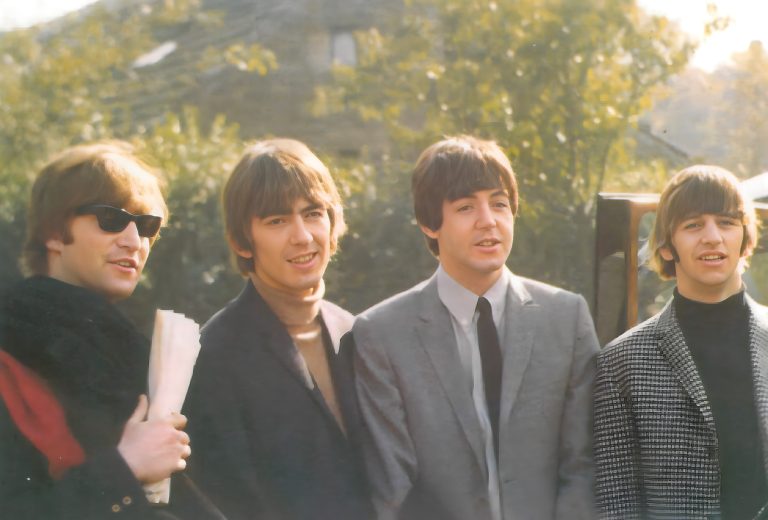
Countless celebrities have stayed at Holdsworth House, most famously The Beatles who visited on 9th October 1964 - John Lennon's 24th birthday.
The Pearson family had to vacate their own bedrooms to accommodate the Fab Four and manager, Brian Epstein. All hotel staff were sworn to secrecy because Rita Pearson was afraid the gardens would be trampled by thousands of screaming fans.
The group arrived late on 9th October 1964, following a concert at the Gaumont Theatre in Bradford - the opening night of their only British tour. The local police blocked the road at Bradshaw, causing a diversion and sending fans in the wrong direction, thus allowing easy access to Holdsworth House for The Beatles.
John Lennon and Ringo Starr slept in the room that is now an office; Paul McCartney and George Harrison stayed in the Ayrton Room - now a private dining room. The band dined on turtle soup and steak Diane. The head waiter wrote their order referring to the band as 'The Beetles' (a copy of the food order can be found on the reception wall).
To this day Holdsworth House continues to welcome famous faces who are performing in the northern theatres or filming in the West Yorkshire area.
Read more about The Beatles' stay


What the records add
Freddie Pearson. Freddie was born in 1905 to a family of modest means off Church Street, not far from Halifax railway station, and baptised at Halifax Parish Church. The 1911 census has the Pearsons at 17 St John Street, one of the back-to-back streets that stood past India Buildings where a filling station later was, a rough area then. As a youth he worked for his father's greengrocery in the Piece Hall, in its wholesale market days, and had a horse and cart of his own for deliveries to Siddal; each of the Pearson sons had a round. He went to work at Gledhill's, the cash register makers at Trinity Works, and then struck out south to find his fortune. For a while he made money making and selling Kirby grips (there is a donkey story that goes with it, which David Glover had no time for that night). Photographs show a short, sharply dressed man in a car full of party girls somewhere in London; he loved the nightlife and longed to bring something like it to Halifax. His friends there included Redmond Cafferata, from a well-to-do family of Italian descent, with whom he travelled to India in 1946, towards the end of the Raj, and where Cafferata died, at Baroda. It was there and in Europe that Freddie became close to the Maharaja Gaekwad of Baroda, enormously wealthy and part resident in Europe, for whom he was a sort of Mr Fix-it. He went to the best clubs in London, the Embassy and the Colony, where the figures on the edge of gangland, the Kray twins and Jack "the Hat" McVitie, also went: the same rooms, no suggestion of any dealings. Back in Halifax he held the franchise for one-armed bandits across part of the north of England, which made him quite a bit of money, and lived at Longfield, near Triangle, above the Ryburn valley at Sowerby. In 1950 he married, as his second wife, Rita Laycock, a very pretty local girl who had worked for a while with Helena Whitbread at Harella in Halifax. (Helena's daughter Rachel was in the audience for the talk.)
Grand designs. Houses of this kind were cheap in 1962, and so was old oak. The house had been divided in two in the late 19th century, its inside much altered, and very few original fittings were left; most of the carving and timberwork in the house today was brought in by Freddie and Rita early in the 1960s, much of it from Derbyshire. Rita had an eye for antiques, for drapes and curtains and for a scheme, and put together something the Halifax area had not seen before. A photograph in the Courier shows Freddie inspecting the Stone Room fireplace. That first winter, 1962 to 1963, was one of the worst in memory, and Gail and Kim went to school on a horse-drawn sleigh.
The company. The Halifax Courier of 13 December 1962 recorded a new private company, Cavalier Country Club Ltd, Holdsworth Hall, Holmfield, Halifax, with a nominal capital of £10,000 in £1 shares and four directors: Fred Pearson, Mrs Rita Pearson, Paul Moore and Mrs Joyce Moore, all of Longfield, Triangle, near Halifax. Paul Moore had for many years been sales manager at Whitaker's Brewery; both couples, the paper said later, had plenty of experience of running a club.
The opening. In March 1963 the Courier announced "Champagne party on opening night": the Cavalier Club was to be a "top-man's" club with limited membership, five guineas a year for ordinary membership (seven guineas joint) and three guineas for country membership (five joint); hundreds of applications had poured in from prominent local men, and the opening night should spark off a whole new social circle in Halifax and the neighbouring towns. The house, famous for its mullioned windows, was a photographer's paradise, the view through the gateway at the bottom of the garden a favourite subject, and the Executive Room, the De Aldworth Room, was pictured with its tall chairs against the mullioned windows, for board meetings, wedding receptions and private parties. On Monday 8 April 1963, under "Historic mansion becomes luxury club", the paper reported that Holdsworth House would open on the Thursday as one of the most luxurious clubs in Yorkshire, with no expense spared to restore the atmosphere of the 17th century: one of England's greatest living authorities on 17th-century furniture had been called in to advise, the house was furnished throughout with genuine antiques supplied by Maurice Goldstone of Bakewell, the two dining rooms could cater for 80 to 100, and the new owners, who had bought the house and grounds from Mr and Mrs T. A. Hoyle the previous October, had already spent about £30,000 on it (the grounds, the paper noted, had first changed hands for sixpence in 1274). There were further plans for a beer garden and a swimming pool. Four hundred people came to the opening, Freddie in the middle of the photograph. The name came from the age of Charles I, in which the house was built; men were "Cavalier" and women "Milady". A continental touch was given to the restaurant by the 23-year-old Spanish chef Pepe Palomar and a team hired from Europe through a London agency, and the club thrived. A business man's luncheon buffet was 7s 6d, served from 11 to 3, with grills, and dinner from 7.30, at "the North's most luxuriously appointed country club", telephone Halifax 64270; it was good to get down to draught Guinness at the Cavalier, said the toucan in the 1963 adverts. An aerial photograph of 1964, which hangs in the hall, shows open country behind the barn where the bedrooms now stand.
The Beatles. It was through a London contact known as Uncle Stanley, whom nobody has identified, that Freddie heard of the Beatles' coming visit to Bradford in October 1964 and saw the publicity in bringing them here. A route was devised so that fans would not know where they were going after the show, and Holdsworth was an unlikely place to look, since it did not then put people up at all. Paul and Ringo slept in the Ayrton Room, and Brian Epstein and his partner in the De Aldworth Room; the Pearsons moved out of their own bedrooms to accommodate eight guests. It was 9 October 1964, John Lennon's 24th birthday, and he had raging toothache. There are few photographs, because it was all very low key: the four of them in the garden, Brian Epstein and friend beside the car, and Kim Pearson, a good deal smaller than now, with Paul McCartney. The famous bill on display near reception is addressed to "Beetles" by a member of staff who was not English and can be forgiven. (The Pathways film and the BBC Radio Leeds interview above tell the family's own version, which is fuller.)
Bedrooms. It was on the strength of the club that bedrooms followed. "Cavalier Club extends its services", said the Courier in June 1965, two years after the opening: membership had grown by personal recommendation and applications were now arriving from well beyond the Halifax district; the club had a reputation for its cuisine and first-class service and for the building and grounds themselves, with a quiet country mood its members preferred to a chrome-plated night club; and a residential extension, a ground-level block, had been built on at the rear. It was, David Glover said as kindly as he could, not a building of much quality, and neither was the next.
Stars. The Skyliners, Marty Fayne, Jim Senior, Ian Owens and Martin Hindle, local lads who played regularly at the Cavalier, were visited in May 1967 by Jayne Mansfield, then appearing at Batley Variety Club; she was killed in a car accident in America the following month. On 19 August 1967 Freddie welcomed the film and television actor John Gregson and Sylva Langova, appearing at the Grand Theatre in Leeds, and that August Gail Pearson was photographed at the club with Ann Ridler and James Ellis of television. Cliff Richard enjoyed eating in the old breakfast kitchen with Rita's sisters, who worked here, and appreciated brown sauce. Rita and Freddie were photographed in the late 1960s, she on his lap, and in 1971 Rita appeared in a Midland Bank advertisement as Mrs Rita Pearson of the Cavalier Country Club: "We wouldn't be where we are now without the Midland Bank". Photographs of the interiors in the 1970s show the old house at its best and a plain bedroom in the new block.
The extensions, and the end of the Cavalier years. In May 1978 J Wimpenny and Co of Linthwaite won the contract for a 20-bedroom extension to the Cavalier Country Club, Holmfield, costing £125,000, built further out at the back. Rita died in 1981, young, leaving Freddie a widower. A few years later much of the poorer building was taken down and better put in its place, most of which still stands. In March 1986 the hotel was given a special commendation in the Civic Trust's annual awards, about 900 entries strong, for a bedroom wing the Trust had once described as "of striking ineptitude" and which had been redesigned and rebuilt to blend with the rest of the building. The Trust's director, Michael Middleton, came for the presentation; the Mayor of Calderdale, Councillor Tom Lawler, handed the commendation certificates to Freddie Pearson, the architect Kevin Drayton and the builder David Wimpenny, and said the improvement mattered because Calderdale was short of good hotel accommodation. The hotel manager then was Jonathan Philips. In August 1986 Mary Halstead, Rita's sister and Freddie's sister-in-law, retired after 23 years as breakfast cook and head housekeeper, in charge of six staff and cooking breakfast for 40 people every day; she had worked at Halifax General for ten years before coming here in 1963, and the staff gave her a bouquet, a cut-glass vase and towels. Freddie died peacefully at home on 12 September 1989, aged 83; the Courier notice named him the dearly beloved husband of the late Rita and a loving father of Gail, Kim and Fay, and the service was at Halifax Parish Church on 18 September, followed by interment at All Saints' cemetery. Then Kim and Gail: a new era, onwards and upwards.
Look for

An eye for antiques
Holdsworth House was first opened as a hotel in 1963 by the late Rita and Freddie Pearson (pictured). A great deal of fine oak furniture was purchased by Freddie in the 1960s. Freddie thought he had been 'robbed' if he paid more than £5 for one of the fine carved chairs, which are still used in the restaurant.
See it in the 3D tour
The Witch's Cupboard
The oak doors that are hung as decoration on the walls of the restaurant were nicknamed The Witch's Cupboard by John Lennon who stayed here in 1964. After appearing on the Antiques Roadshow (filmed at the Piece Hall in 2018 and shown in 2019), we discovered the doors are from a 17th century alchemist's laboratory. Read about what Antiques Roadshow expert Lisa Lloyd thought they were worth. In 2021, the doors were borrowed by the crew of The Gallow's Pole. During filming the TV show that's based on the book by Benjamin Myers, director Shane Meadows asked us if he could borrow the doors to add authenticity to the film set for his 18th century alchemist character. We were delighted to oblige!
See it in the 3D tourThe Beetles food order
on the reception wall.
The 1964 aerial photograph
Hangs in the hall; open country behind the barn where the bedrooms now stand.
See it in the 3D tourLocal
Halifax in 1963 was still a mill and toffee town; the club opened three weeks after the Beatles' first LP came out. The Gaumont in Bradford, where they played on 9 October 1964, is now the Bradford Live venue.
National
1963, the year of the Profumo affair, Beeching and the Great Train Robbery; 1964, the first Wilson government, elected six days after the Beatles' night here; 1966 and all that; the three-day week in 1974; the 1980s.
World
Kennedy shot in November 1963; the moon landing in 1969; the Beatles broke up in 1970.
From our History Booklet (2023), as printed
The Cavalier Country Club
After 330 years as a private residence, closed off to the world, Holdsworth House opened its doors to the public for the first time in spring 1963. It was the vision of one family, to build a successful business that kicked off the most recent chapter in the house’s history.
The Swinging Sixties
The modern history begins in 1962, one of the coldest winters on record, when the Pearson family, headed by Freddie and Rita, really arrived on the Halifax scene. A local couple with two young children (Gail and Kim) the Pearsons embarked on their ambitious plans to convert this beautiful 17th century house into a stylish country club, revamping it whilst retaining the integrity of the architecture. The house lent itself to the conversion remarkably well and, apart from a few oak doors that warped due to the introduction of much needed central heating, the main rooms in the original house remain very much as they have for centuries.
Halifax-London-Halifax
Freddie Pearson was the youngest of seven children. As a boy he helped his father (a local fruit and vegetable trader) with deliveries on the family’s horse drawn wagon. A photo of the Walter Pearson cart at the Halifax Piece Hall can be seen in the hotel’s bar. As a young man, Freddie saw his fortune in the bright lights of London. It was here that he became known for his canny ability to close a deal, his friendly personality, his charm and his snappy dressing! He was a great raconteur and, in years to come, Freddie’s stories of wartime London, Maharajahs and the colourful characters he encountered would enthral many a guest.
© Malcolm Bull’s Calderdale Companion
© Alex Knight Photography
Above: Original auction advert for Holdsworth House
Above: Glamorous Rita Pearson
Below: Snappy dresser Freddie Pearson
Entrepreneurs
Freddie Pearson met his future wife Rita in 1949 on a trip back to Yorkshire. Rita was working as an accounts clerk at Harella, a Halifax clothing company that would become one of the biggest names in fashion during the Sixties. Rita was a colleague of Helena Whitbread, who became famous as a writer and for her work decoding and transcribing the diaries of Anne Lister of Shibden Hall. A friend of Holdsworth House, Helena remembers Rita well and told Rita’s daughter, Gail, that as a junior at Harella she was a little in awe of Rita who was part of the ‘Halifax fast set’.
The Making of The Cavalier
Freddie and Rita soon married and settled in Halifax. Freddie had always wanted to replicate the sort of nightlife he had enjoyed in London. Halifax was a wealthy town and he saw his opportunity when Holdsworth House came up for sale at auction. They purchased the five-bedroom, threebathroom house set in three acres of land (plus the barn) for £12,000 from Tommy Hoyle, a local mill owner. They quickly threw themselves into converting the house, using local craftsmen and suppliers. They scoured the antique dealers and reclamation yards for oak furniture that would blend in with the historic building. Luckily, oak was not in fashion at the time and they managed to buy beautiful chairs, tables and settles (many of which are still in use) for next to nothing. Rita chose to decorate the house with antiques, oil paintings and tapestries, always sympathetic to the age and charm of the building. A number of the original bills for curtains, carpets and cutlery are retained in the hotel archives; Rita and Freddie certainly didn’t hold back on creating a luxurious setting! Astonishingly, Freddie and Rita had absolutely no experience of employing catering staff. They used a London agency to hire a young Spanish chef, Pepe Palomar, and a restaurant team direct from Europe. They chose well and the brigade worked brilliantly, giving the restaurant a touch of Continental pizazz... although it’s not hard to imagine what the team thought about the Yorkshire weather, especially as that winter had been one of the worst since 1948. On the 11th April 1963, the Cavalier Country Club opened. The name was chosen to reflect the era of Charles I, who reigned when the house was built. The club was an instant hit and membership soon numbered over a thousand. Gents were called ‘Cavaliers’ and the ladies ‘Milady and, with an annual fee of seven guineas, it was most definitely the place to be seen. On many an evening the historic halls were filled to the rafters with people enjoying large banquets and fine dining. Rita and Freddie knew how to put on a good party and as the club’s fame spread, a whole new social scene developed with regular dinner dances, charity events and a stream of celebrity guests.
Below: Freddie Pearson inspecting the Stone Room fireplace
Above and below left: The Beatles outside Holdsworth House 10th October 1964
Below right: Kim Pearson with Paul McCartney
Not ‘What You Know’ but rather ‘Whom’...
It wasn’t long before Freddie’s biggest stroke of genius ensued. He had a contact behind the scenes with The Beatles and managed to persuade the band’s manager, Brian Epstein, to bring his group to Holdsworth House after their performance in Bradford (the opening night of their Autumn 1964 tour). The Beatles’ visit was a fine example of Freddie’s brilliant foresight: who’d have guessed that so many guests would still be keen to know about the Fab Four’s stay today? On 9th October 1964 (John Lennon’s 24th birthday), The Beatles arrived after playing a sell-out concert at the Gaumont Theatre. On the journey to the Cavalier Country Club, the police set up a diversion, fooling fans as to the true destination of the band’s overnight quarters. Rita was terrified that her prized gardens would be trampled by thousands of adoring fans, but the police diversion worked and The Beatles’ driver pulled the car into the gravelled turning circle unnoticed. That evening, Freddie and Rita and their two daughters had to vacate their bedrooms in the manor to accommodate the band. Brian Epstein slept on a camp bed in what is now the De Aldworth Room. They ate in a private room before drinking in the bar with the few club members who were ‘in the know’. The Italian head waiter, Luigi, wrote The Beatles’ food order - including turtle soup and steak Diane - misspelling them as ‘the Beetles’. A copy of this original ticket is on display near reception. As a typical teenage fan, Gail Pearson had been sworn to secrecy. It was far from easy facing school friends the following Monday and telling them she hadn’t been able to share the news that the biggest band in the world had stayed overnight at her house! Gail recalls, “I wasn’t allowed to go to the concert and didn’t even catch a glimpse of the band the night they arrived. The next morning, they slept in and had breakfast in their rooms. When my mother caught me loitering on the corridor, visibly upset, she decided to take the initiative. She rapped sharply on Paul and George’s bedroom door and said, ‘Are you decent? My daughter has been waiting all morning to see you’. Then she opened the door and pushed me in, much to my embarrassment!” Gail continues, “The Beatles couldn’t have been nicer. They chatted very politely to me. Paul McCartney asked if I wanted a cigarette and I said that I didn’t smoke. How I wish I had said yes and saved that cigarette for posterity! “My younger sister Kim also met the band and had her photo taken on Paul McCartney’s knee. I had my photo taken too but my father forgot to put the flash on, so sadly the picture never came out!”
Below: Brian Epstein and friend at Holdsworth House
Showbiz Stars
After The Beatles’ stay at Holdsworth House, many high-profile guests followed throughout the Sixties. World-famous entertainers were appearing on the Northern club circuit, particularly at the Batley Variety Club, and the Cavalier Country Club became the place for the stars to stay. In 1967, blond bombshell Jayne Mansfield was a guest, just six weeks before her tragic death. Gail Pearson’s late uncle Geoffrey Laycock, who lived locally and frequented the club, always recalled her “flirtatious manner” with a raised eyebrow! The Pearsons were glad to welcome many famous faces including Cliff Richard and The Shadows, Cilla Black, The Bachelors, The Small Faces and even Indian royalty; the Maharajah of Baroda was a personal friend of Freddie Pearson. As the success of the club grew, members encouraged the family to offer overnight accommodation. So, a number of prefabricated rooms were added to the rear of the house before a permanent, award-winning structure was added in the 1980s. Décor was typical of the ‘60s and ‘70s, if a little eye-watering by today’s more muted tastes! Rita Pearson died in 1981, aged just 52. Freddie passed away in 1989 and the estate was taken on by their daughters Gail and Kim, who reverted the name back to Holdsworth House Hotel & Restaurant to reflect the manor’s historical significance. Today, the sisters along with Gail’s son Nick, continue the tradition of exemplary hospitality and fine dining, welcoming guests from all over the world. Among the famous faces through the doors more recently are prime ministers (Sir Alec Douglas-Home, Tony Blair, Rishi Sunak), musicians (Robert Plant, R.E.M., Dave Stuart, Florence and the Machine), stars of stage and screen (Ewan McGregor, Emelia Clarke, James Norton, Rudolf Nureyev, Victoria Wood, Sir Derek Jacobi, Anne Reid, James Corden, Jamie Oliver, Suranne Jones), plus many of the cast and crew from TV shows Riot Women, Gentleman Jack, Last Tango in Halifax, Happy Valley, Ackley Bridge, The Bidding Room, Marvel Studios’ Secret Invasion, and The One Show... the list goes on!
Top left: The Batley Variety Club
Left: Sir Derek Jacobi and Anne Reid at the hotel for filming Last Tango in Halifax
Bottom left: Jamie Oliver with Gail Pearson
Holdsworth House today
Gail and Kim, then Nick: the parterre restored, the gazebo saved, the doors on television, and a blue plaque.
To commemorate the hotel's 35th anniversary in 1997, the period Sunken Parterre gardens at the front to the house were restored. The design was taken from John Parkinson's book A Garden of Pleasant Flowers published in 1629. The planting includes many contemporary flowers and shrubs.
The sundial overlooking the Parterre garden was added at the same time and a local junior school put together a time capsule, which was buried beneath the sundial's base.

Later, in the 1980s, the Pearson family planted two further ash trees, imported from Italy because of their rarity.
After appearing on the Antiques Roadshow (filmed at the Piece Hall in 2018 and shown in 2019), we discovered the doors are from a 17th century alchemist's laboratory. In 2021, the doors were borrowed by the crew of The Gallow's Pole.
In April 2025, The Halifax Civic Trust awarded Holdsworth House an official Blue Plaque to commemorate The Beatles' stay in 1964.
Today the Grade II* Listed building remains under the watchful eye of the third generation of Pearsons.
What the records add
The Witches' Cupboard. In 1964 John Lennon noticed the unusual pair of doors Rita had found, nobody now knows where, with their curious imagery that looked like sorcery, and named them the doors to the Witches' Cupboard. In 2018 they went down to the Piece Hall for the Antiques Roadshow (transmitted the following year), where Lisa Lloyd identified them as European and once the doors to a medicine cabinet, and they were later borrowed for The Gallows Pole, where they can be glimpsed once or twice.
Television. The era of television personalities at Holdsworth House really began with Jamie Oliver's "media whirlwind" visit in 2011, filming Jamie's Great Britain, with the crew around for almost a week; he was a delight to work with. Tony Robinson was photographed by the grandfather clock in the Hall; so was James Norton, who stayed during the filming of Happy Valley, and so, in 2023, was Ewan McGregor, here for A Gentleman in Moscow, part of which was filmed in Halifax Town Hall. Sir Derek Jacobi and Anne Reid were at the house in 2019 for Last Tango in Halifax, and Anne Reid has been several times; a photograph in the garden shows Sally Wainwright, Gail, Anne Reid and Karen Lewis together, and another the clapperboard in the parterre during filming. David Mitchell, Rob Brydon and Lee Mack came in May 2022. There is more on all of them on our film and television pages.
The gardens and the gazebo. In 1997 the period sunken parterre gardens at the front were restored to a design from John Parkinson's A Garden of Pleasant Flowers of 1629, four years before the house was built, and the fine and unusual garden sundial was added the same year. The Grade II* listed 17th-century gazebo was restored, the work completed in 1998, with wall stencil decoration inside by Linda Brill, who is fairly local; you can hold events in it and be married in it. Many happy couples have had their weddings and receptions here.
Today and the future. A four-star hotel with 32 rooms today (the slide said 33, and David Glover was told the number has gone up and down over the years), and a stone gateway that has people for gates. A Halifax Civic Trust blue plaque was to be placed in the weeks after the talk to mark sixty years since the Beatles' visit (it was unveiled in April 2025), and the management's comment for the record was: "We are always looking to develop the business to ensure its future and continually employing local people". He ended with Eric, the resident cat for many years, a great character and his friend on every visit, who had died not long before. Remembering Eric.
With thanks to Gail Moss and Kim Wynne; Liz Howe, his greatest support in putting the talk together; Lynne Sunderland, for the portraits now at the house and the silver on loan; and West Yorkshire Archives, Calderdale Libraries, the British Newspaper Archive, the Halifax Courier, Halifax Photographic Society, Halifax Antiquarian Society, Gary Beaumont (halifaxpeople), Halifax Minster, Bradford Museums, Malcolm Bull's Calderdale Companion, Calderdale and Huddersfield NHS Foundation Trust, Bradford Unconsidered Trifles, Bristol Art Gallery, BBC TV, Google Maps, Pete Barnes Photography, Maddie Farris Photography, Historic England, ancestry.co.uk and Liz Baker Photos.
Local
the Piece Hall, saved from demolition by a single council vote in 1972, reopened after restoration in 2017; Halifax on television in Last Tango in Halifax (2012), Happy Valley (2014), Gentleman Jack (2019) and in cinemas in Wuthering Heights (2026).
National and world
the first web page in 1991; the pandemic of 2020, which closed the house and gave the Stuart Room its new roof; the coronation of Charles III in 2023.
From our History Booklet (2023), as printed
20th Century Restoration
Fast forward 350 years to the late 1990s and, whilst the main house was well preserved, the Stone Gazebo was falling into disrepair. As a Grade II* Listed building of ‘significant national historical importance’, Holdsworth House earned funding from English Heritage to restore the Gazebo. As many of the original features as possible were retained and restored, but the experts believed the fireplace inside the Gazebo to be Victorian rather than Jacobean, indicating that the Gazebo has been a well-used feature of the manor throughout history. In 1998 a local decorative artist, Linda Brill, added the interior stencilling (pictured above) to the repaired Gazebo plaster. Other parts of the interior walls were purposely left bare to reveal the original stonework.
V&A Museum-inspired Designs
Linda Brill explained, “We wanted the stencil design to relate to the period of the house, and I found inspiration from Tudor and Elizabethan designs in the V&A Museum. The repeated heart-shaped motif took two months to complete and is filled with stylised flower designs. I chose this to echo the design of the newly planted knot garden.” Linda was so enamoured with the Gazebo that she chose it as her wedding venue a year later.
A Very Modern Use
Today, the Stone Gazebo is a popular private dining space and wedding ceremony venue. The rafters are exposed to show the beautiful four-gabled structure and the fireplace houses a modern heater. Access to the Gazebo is via well-worn steps and a low doorway that requires visitors to duck to avoid a painful bump on the head!
20th Century Design
Some time after 1933, the space now known as the ‘Long Bar’ was converted from a garage, which had housed a car and a turntable! In the 1970s, the Pearson family built a covered walkway between the Long Bar and the Stuart Room (across the Courtyard), which is no longer there. In the 1980s, the bedrooms to the rear (north) of the hotel were built. These replaced prefabricated bedrooms that had been added temporarily when the popularity of the hotel (then called the Cavalier Country Club) rocketed. The architect won an award for the new build, which took the hotel from just a few rooms to 40 in total. Since then, the decor has certainly changed and, in recent years, the hotel has reduced the number of bedrooms to 33 by merging smaller rooms into larger Suites. The Pearson family continue to own and manage the hotel. Gail, Kim and now Gail’s son Nick are very careful to furnish the public areas sympathetically. Heavy oak furniture, historic tapestries and ornamental designs are commonplace around the property. There is little doubt that this style truly lends itself to the fabric of the building. Antiques, such as the alchemist’s cupboard, the original servant bells and the wig cupboard adorn the walls to add the sense of history and curiosity that makes Holdsworth House so intriguing.
Restoration Work
In 2020, when the hotel was closed for the coronavirus pandemic, the 60-tonnes, stone slate roof of the Stuart Room was replaced. Working in the traditional way, each slate was painstakingly removed by hand, cleaned and re-laid. In addition, a number of bedrooms and public areas were redecorated, using William Morrisinspired wallpapers and heritage colours. In any given year, Holdsworth House Hotel has a continual programme of restoration, repair and upkeep to ensure it runs efficiently and effectively, whilst balancing on trend-designs with historical integrity.
Below: Images of Holdsworth House in the 1970s
The Sunken Parterre Garden
From the early 20th century to the 1960s the garden changed little. At some point the wooden gates that hung on the enormous gateposts were removed, a large evergreen near the entrance porch was felled and the ivy that swarmed the south facade was replaced by a beautiful clematis. In the 1960s when the Pearson family bought Holdsworth House, the garden was a rich variety of cottage garden plants, shrubs and trees, and it adopted a less formal approach to design than today. In 1997, the 35th anniversary year of the hotel, work began to restore the Parterre garden to commemorate the new Millennium. North of England landscaper David Redmore Garden Design drew up plans for the entire garden including the elaborate, sunken knot garden (a copy of the design can be seen in the hotel lobby). The Box hedge and planting ideas were inspired by Royal Botanist John Parkinson’s book A Garden of Pleasant Flowers published in 1629. Today, each spring, a sea of tulips bursts through the Box and you might spot floral herbs such as Valerian in the borders, in a nod to the house’s history. The sundial overlooking the Parterre garden was added for the Millennium and children from the local Bradshaw Junior School put together a time capsule, which is buried beneath its base. The capsule includes a class timetable, children’s magazines of the time, and an old tape of music.
Top: The sunken Parterre Garden
Centre: One of the original weeping ash trees
Bottom: The gateposts circa 1900
A New Role on the Small Screen
Holdsworth House’s architecture, historic halls and gardens have found new audiences through the camera lens. In the last 15 years, this grand Jacobean manor has appeared in numerous primetime TV shows as well as featuring in over 2000 couples’ wedding albums.
Jamie Oliver’s Great Britain
The media whirlwind began in 2011 when TV’s super-chef Jamie Oliver filmed at Holdsworth House. Jamie and his 22-strong crew spent almost a week filming for Channel 4’s Jamie’s Great Britain. Oliver described his series and accompanying cookbook as “a big celebration of brilliant British food.” True to his relaxed style, Oliver was filmed sitting on the pretty Stone Gazebo steps in the gardens, rustling up dishes using portable stoves. How anyone can pull together a magnificent lamb shank in that way is beyond comprehension! The frenzy that followed Jamie Oliver’s show helped kick-start a decade of small screen appearances. Working in tandem with companies like Screen Yorkshire, Creative England and Calderdale Council (who work to attract filming to the area), TV companies began taking a fresh look at West Yorkshire for their filming requirements. From rugged landscapes and breathtaking seascapes to quaint villages and modern cities, they saw there really is everything in Yorkshire that a TV company needs.
© Kyte Photography
© David Loftus
Influential Screenwriter Sally Wainwright OBE
BAFTA-winning screenwriter and director Sally Wainwright is from Calderdale and has always championed the area. Wainwright rose to fame writing TV and radio scripts for high profile shows including The Archers, Coronation Street, At Home with the Braithwaites, Unforgiven, Scott & Bailey, Last Tango in Halifax, Gentleman Jack and Happy Valley. Many of her shows are based upon and filmed in Halifax and the surrounding areas. (Sally Wainwright pictured far left, at Holdsworth House for the 2023 Holdsworth House Diamond Anniversary Art Competition)
Last Tango in Halifax
Now a friend of Holdsworth House, the hotel’s relationship with Sally Wainwright was formed back in 2012 and season one of her creation Last Tango in Halifax. The popular TV comedy drama introduces us to characters Alan and Celia, a senior couple who were childhood sweethearts who met again in later life via internet dating. At the end of the first series, it was clear that Alan and Celia had fallen in love and were to be married. A few weeks later a call from the TV location team meant a hastily arranged visit for Wainwright as she planned for the characters to get married at Holdsworth House in season two. Under Wainwright’s direction, filming took place in the hotel gardens, restaurant, hall and bar in summer of 2013. Set designers turned warm summer days into a cosy winter setting, with the help of CGI snowfall on the outdoor shots. The TV ‘wedding of the year’ aired on Christmas Eve 2013. The number of viewers searching the internet for ‘where Alan and Celia got married’ crashed the hotel website. To this day, many visitors want to retrace the steps of the actors.
Happy Valley
Wainwright’s next big show, Happy Valley, was a three-season show spanning seven years. Many of the stars stayed at the hotel during filming including Sarah Lancashire, James Norton (pictured below), Siobhan Finneran, Derek Riddell, Rhys Connah and George Costigan. In 2022, the production units rolled into Holdsworth House to film scenes in reception. Whilst actors were hired to play the part of hotel receptionists, the real front of house team were hiding just around the corner, ready to answer the phones between takes.
Ackley Bridge and Hank Zipzer
The Channel 4 show Ackley Bridge is a schoolbased, comedy-drama series filmed at the former St Catherine’s school adjacent to Holdsworth House. Being so near to the film set, the crew used the hotel several times to film scenes that called for a bar or garden scene. The former school was also used to film the children’s CBBC show Hank Zipzer, written by and starring Henry ‘The Fonz’ Winkler. It was a pleasure to welcome Mr Winkler to the hotel throughout filming.
The Antiques Roadshow
In 2018, the BBC’s Antiques Roadshow featured items from the hotel when it filmed at The Piece Hall in Halifax (pictured below right). Experts were interested in two large, wooden doors that decorate the walls of the hotel restaurant. It was thought that these old doors incorporated masonic symbols and, over the years, many guests have tried to decipher their meaning. But they turned out to have a far more fascinating history... The doors were purchased by Freddie Pearson in 1962 when he bought Holdsworth House; they were found at an antique dealer’s yard in Bakewell. The back of one door was being used as a builder’s cement-mixing board. Antiques Roadshow expert Lisa Lloyd thought they were ‘one of the most interesting items she’d seen all year’. She certainly helped unravel the meaning of their symbols: the cloaked hand holding a staff, the flaming cauldrons and the magic square are all symbols of an alchemist’s laboratory, indicating that the doors once hung on a 17th Century cupboard storing medicines or ‘quack’ remedies. Lloyd believed the doors originated from Europe and at an auction would fetch £5000 - £8000. The doors were later borrowed by film producer Shane Meadows for inclusion in his TV series The Gallow’s Pole, which was filmed around Calderdale and based on Benjamin Myers’ book of the same name.
Gentleman Jack
Sally Wainwright’s 2019 show Gentleman Jack (pictured below bottom), starring Suranne Jones, was filmed three miles away at Shibden Hall. Cast members and crew stayed at the hotel while filming took place. Shibden Hall was the home of real-life 19th Century ‘Gentleman Jack’, Anne Lister. Today the hall is a museum worthy of a visit. The multi-season hit show sparked global interest in Anne Lister and each April visitors from many continents flock to Halifax for literary events, social walks, history tours, food and art events that make up the ‘Anne Lister Birthday Week’.
The Next Chapter...
The role of Holdsworth House in the heart of the Halifax community continues to grow and strengthen. Each visitor that passes through its doors adds their name to the history books. The team would like to thank everyone for their custom and their interest in preserving this wonderful building.
Above: Freddie and Rita Pearson who bought Holdsworth House in 1962, pictured in the late ‘60s
Above right: Freddie and Rita’s daughters, Gail and Kim, and their friends riding to school.
Right: Kim (left) and Gail
© David Loftus 2013
Below right: Gail’s son Nick Moss and his artist wife Caz Swanne, the thirdgeneration of the Pearson family now managing the business.
Plenty to discover
Packed full of tradition and character, Holdsworth House Hotel is a hidden gem with many secrets waiting to be discovered. From beamed ceilings and oak panelled halls to ancient tapestries and beautiful stone mullion windows, it offers visitors something special and somewhere unique.
Keep exploring
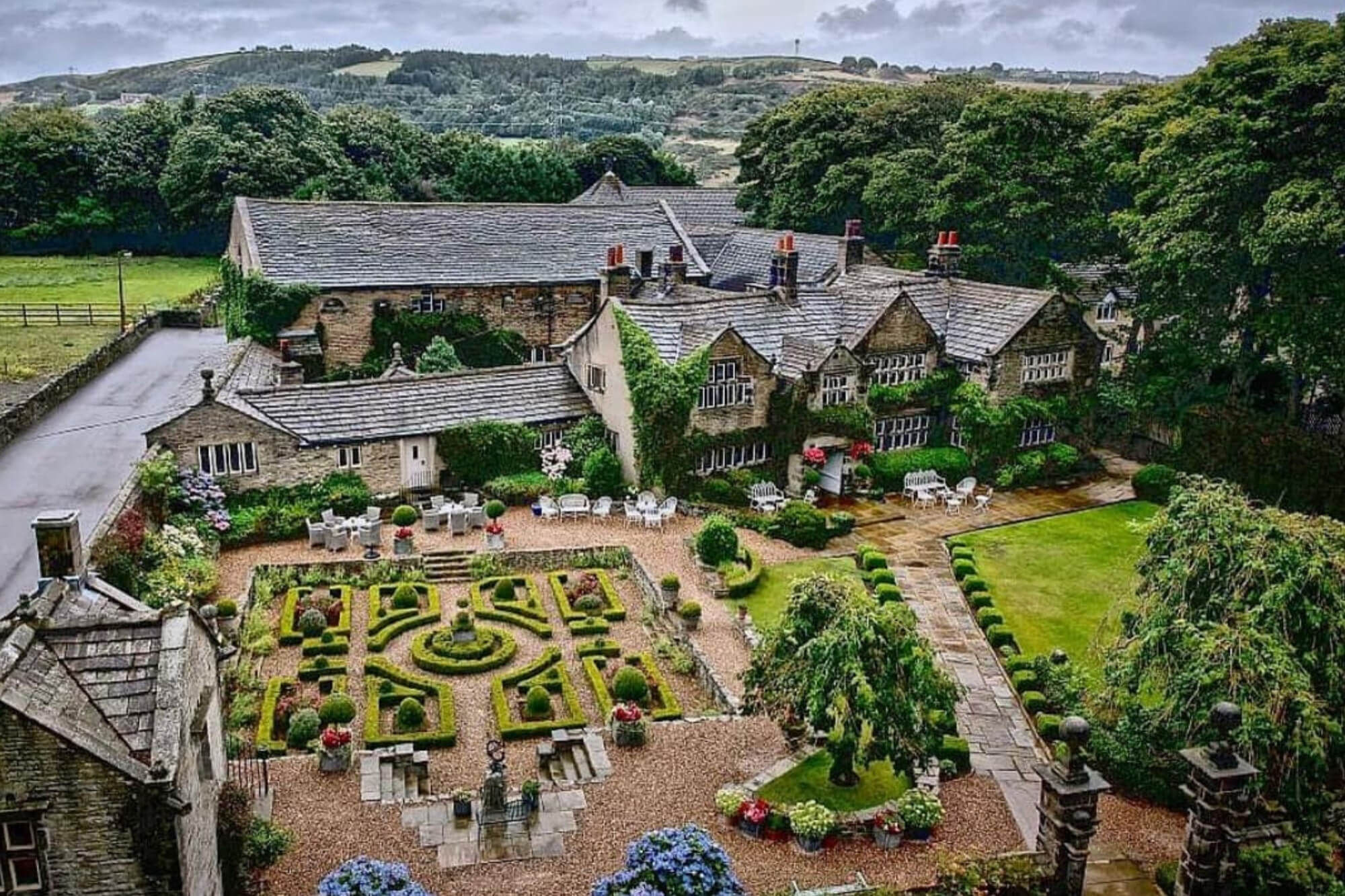


The house is open to everyone
You don't need to be staying to walk in. Come for lunch, for our famous afternoon tea, for dinner in the Panelled Room, or for a drink in the Hall under the Lister clock, and the history is all round you.